Crossing the Red Sea Bible Story for Kids.
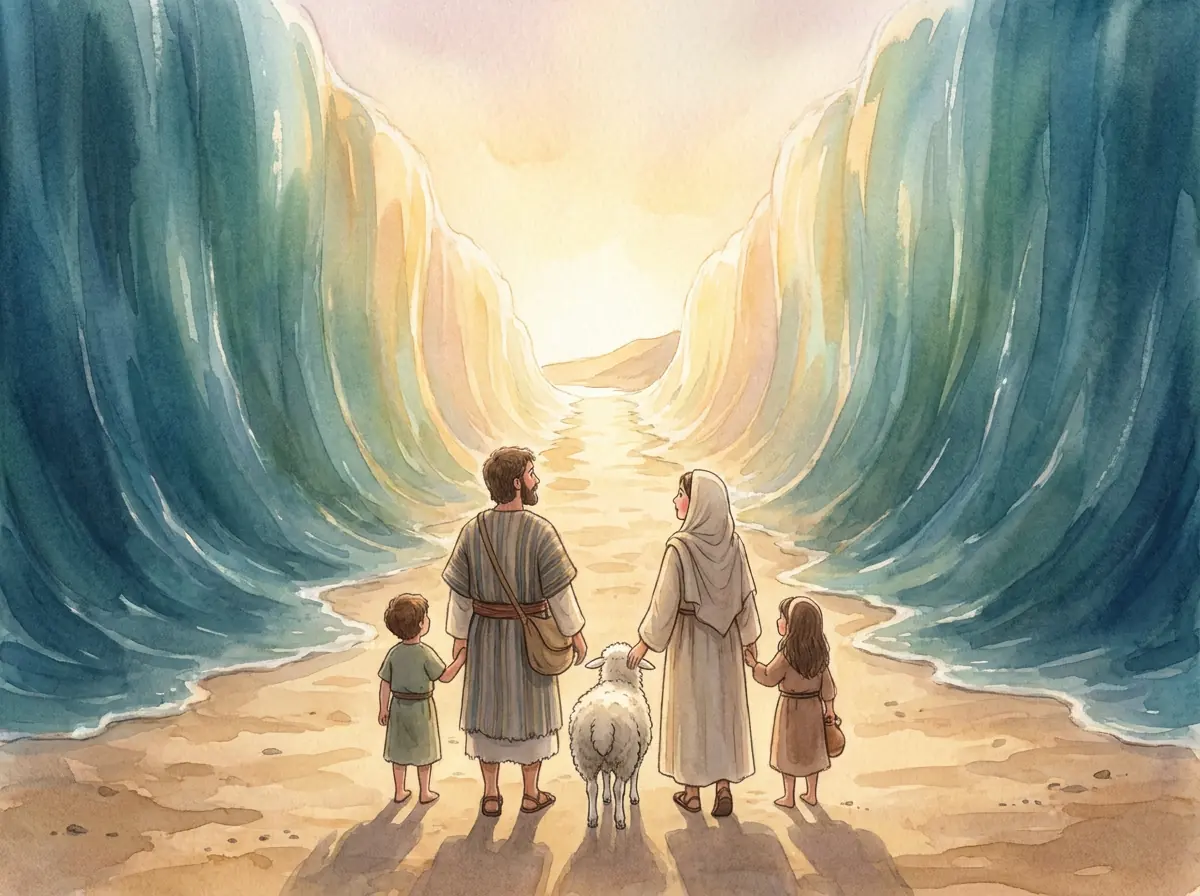
Crossing the Red Sea is one of the most breathtaking moments in the whole Bible: trapped between the water and an army, God's people watch God split the sea in two and walk to freedom on a dry path between the walls of water.
Retold by Hannah Whitford · Exodus 13–15 · Updated September 2026
The Story of Crossing the Red Sea


“Moses stretched out his hand over the sea, and the LORD caused the sea to go back by a strong east wind all night, and made the sea dry land, and the waters were divided. The children of Israel went into the middle of the sea on the dry ground, and the waters were a wall to them on their right hand, and on their left.”
Exodus 14:21–22
“The LORD will fight for you, and you shall be still.”
Exodus 14:14
“Yah is my strength and song. He has become my salvation. This is my God, and I will praise him; my father's God, and I will exalt him.”
Exodus 15:2
Quotations from the World English Bible (public domain). Read the full passage together in your own family Bible. The reference is Exodus 13–15.
“Don’t be afraid. Stand still, and see the salvation of the LORD…”
Exodus 14:13
Moses said this at the edge of the sea, with the chariots coming. Say it together the next time your child is worried.
World English Bible. Little ones can start with just the first line.
The crossing of the Red Sea teaches children that when the way ahead looks impossible, God can make a way. The people could only see water in front and trouble behind, but God saw the path all along.
- 01Walls of water on both sides and a dry path down the middle. It is one of the most picture-able wonders in the whole Bible.
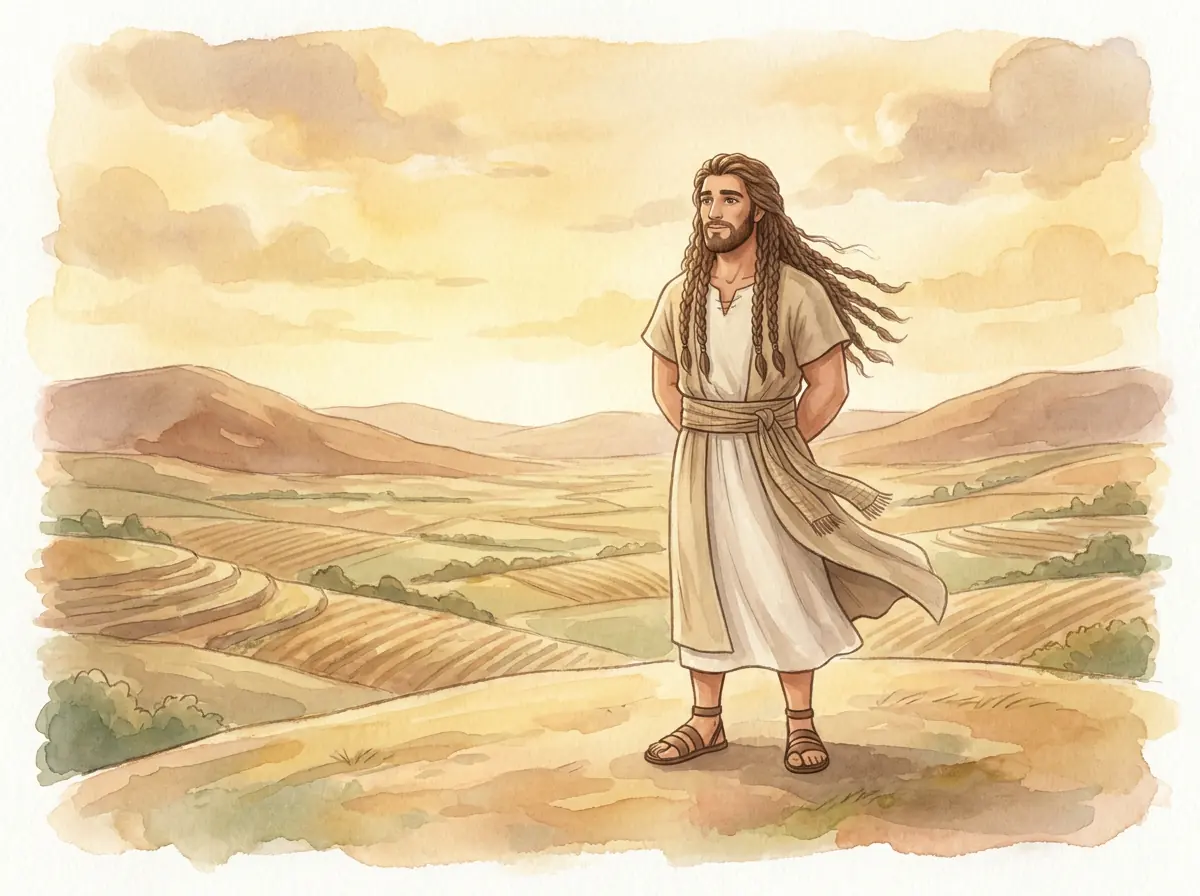
- 02The baby from the basket is all grown up, and his big sister Miriam is back too, so children love meeting familiar faces again.
- 03The pillar of fire is like a nightlight the size of the sky: a comforting picture of God leading the way in the dark.
- 04It ends with singing, dancing, and tambourines on the beach, so even the youngest listeners get a happy, noisy finish.


Teach Bible stories at home or in the classroom.
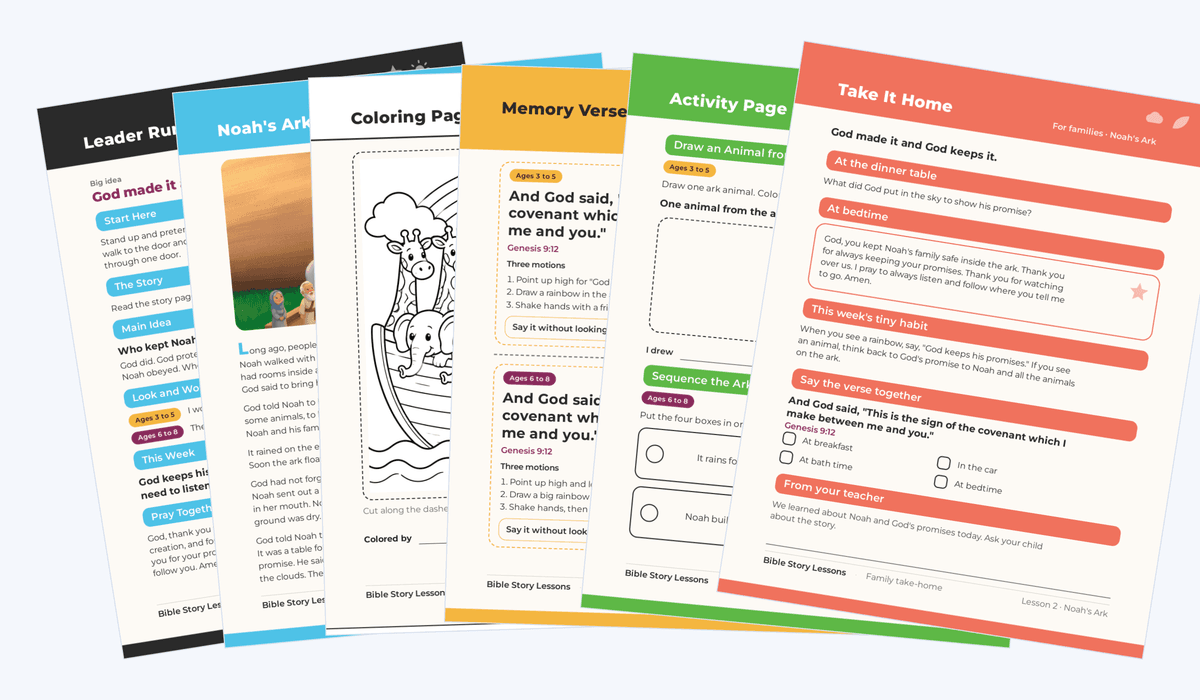
Our Bible Story Lessons Starter Pack has twelve printable lessons for home or church. Try the Noah’s Ark lesson free: seven printable pages, sent to your inbox. See the Starter Pack →
We’ll also send a few emails over the next couple of weeks with lessons, printables and our books. Unsubscribe anytime.
The kind of things parents wonder.
How did God part the Red Sea?
Exodus 14:21 says that when Moses stretched out his hand over the sea, God 'caused the sea to go back by a strong east wind all night, and made the sea dry land, and the waters were divided.' The Bible describes a real wind doing something only God could make it do, blowing all night until the water stood like a wall on the right and the left, with a dry path in between.
What happened to Pharaoh's army?
The Bible says that once the Israelites were safely across, the sea flowed back over the army that was chasing them, and it was gone (Exodus 14:28). With young children it's enough to say the sea closed and the army could never chase God's people again. With older children you can be gently honest that the soldiers were lost in the sea. Scripture treats it as a serious moment, and families can too.
What is the pillar of cloud and fire?
It was the visible way God led His people out of Egypt: a tall pillar of cloud to follow by day, and a pillar of fire to give light by night (Exodus 13:21–22). On the night before the crossing it moved behind the people and stood between the Israelites and the Egyptian army, keeping them apart until morning.
Where is the Red Sea?
The Red Sea lies between northeast Africa and the Arabian Peninsula. On a map today, it separates Egypt from Saudi Arabia. The Hebrew name in Exodus, Yam Suph, is sometimes translated 'Sea of Reeds', and Bible scholars discuss exactly where along the route out of Egypt the crossing happened. In the story, it is the great water between God's people and their freedom.
Is this the same Moses as baby Moses in the basket?
Yes! The baby who was hidden in a basket on the Nile grew up to become the leader God chose to bring His people out of Egypt. Exodus 7:7 tells us he was about eighty years old by this time. And Miriam, the big sister who watched over his basket, is the one who leads the singing and dancing on the far shore.
What age is the Red Sea crossing good for?
It works beautifully for ages 3–8. Little ones love the walls of water, the pillar of fire, and the tambourine dance; older children can talk about being afraid, standing still, and trusting God to make a way when there isn't one.
Conversation starters.
Questions to ask after you read together. No right answers, just good conversation.
The people walked between two tall walls of water. What was under their feet?
The people were afraid, but Moses said, “Don't be afraid. Stand still.” What helps you feel brave when you're scared?
God led His people with a cloud in the daytime and a fire at night. Why do you think He wanted them to see the way?
Miriam thanked God with a tambourine song. If you made up a thank-you song today, what would it say?
Teaching this story.
- 01Play the walk-through-the-sea hallway game: drape blue blankets, towels, or streamers along both walls of a hallway, dim the lights, and walk through together while you tell the crossing part of the story. Letting a child lead the family through “the sea” makes the dry-path picture stick better than any retelling.
- 02If your child asks “did the soldiers die?”, answer briefly and honestly: yes, the Bible says the sea came back and the army was gone. Don't dramatize it and don't dodge it. Then put the focus where Exodus puts it: God kept His people safe, and the story ends in a thank-you song, not a battle scene.
- 03Connect it to Baby Moses before you begin: “Remember the baby in the basket? He grew up.” Children are amazed to realize God was preparing this rescue for eighty years, and that Miriam, the watchful big sister at the river, is the one leading the singing at the end.
- 04Don't skip the detail that the east wind blew all night. The people had to wait in the dark, trusting, before they ever saw the path. It's a gentle way to talk about times when God is working even while we're still waiting.
Stand-Still Sea Bottle
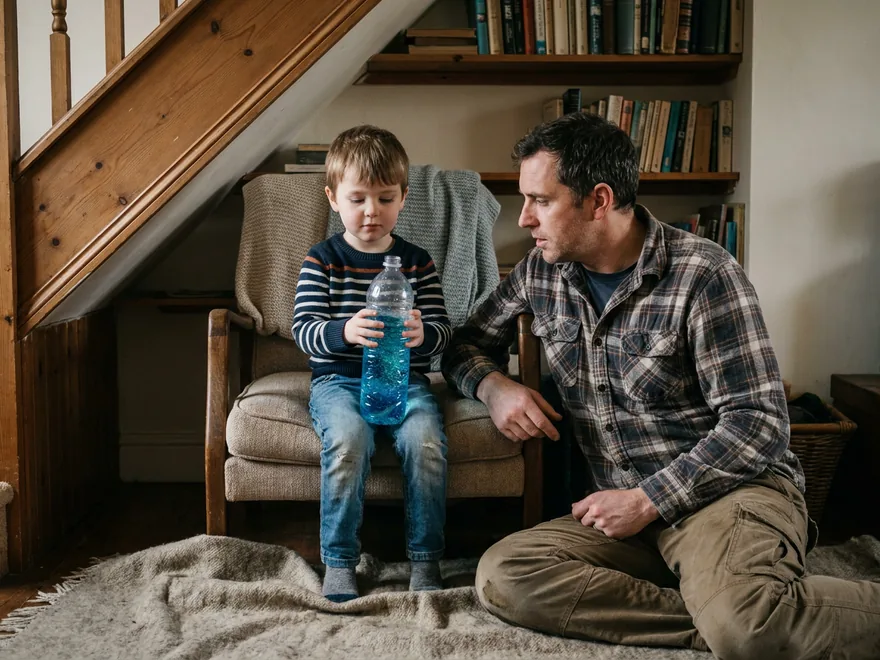
Fill a clear plastic bottle two-thirds with water, add blue food coloring and a spoonful of glitter, and glue the cap shut. Shake it into a stormy, swirling sea, then hold it perfectly still and watch it calm and clear. As it settles, say the memory verse together: “Don't be afraid. Stand still.” It becomes a little tool your child can reach for on worried days.
Parted-Sea Walking Diorama
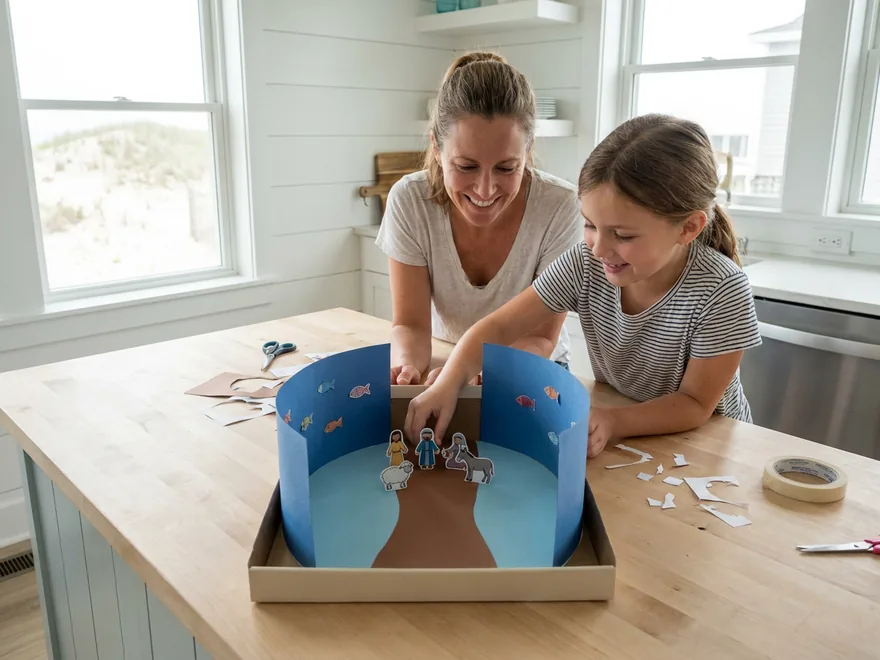
Stand two walls of curled blue construction paper along the sides of a shoebox lid, leaving a path of brown paper or sandpaper down the middle. Draw and cut out little people, sheep, and a donkey to walk the dry path, and stick paper fish onto the water walls, one wall on the right and one on the left, just as Exodus describes.
Keep exploring.
Bible Stories in Chronological Order for Kids
See where this story fits in the full Genesis-to-Revelation reading plan: 27 stories in order with summaries, ages, and a free printable.
Browse →Old Testament Bible Stories
See where the Red Sea crossing fits inside a larger collection of foundational Old Testament stories for kids.
Browse →Bible Stories in Order
Follow the big story from Creation through Egypt and beyond, one child-friendly chapter at a time.
Browse →More stories: Baby Moses · Noah's Ark · David and Goliath
Story 9 of 27 in the reading plan
These Bible story retellings are based directly on Scripture and written for children ages 3–8. Each page includes its Scripture reference so families can read the original passage together. Written and edited by Hannah Whitford. Quotations are verbatim from the World English Bible; each retelling is checked against the passage.