David and Goliath Bible Story for Kids.
David and Goliath is a favorite Bible story for children because it shows how God can use someone small and young to do something big and brave.
Retold by Hannah Whitford · 1 Samuel 17 · Updated September 2026
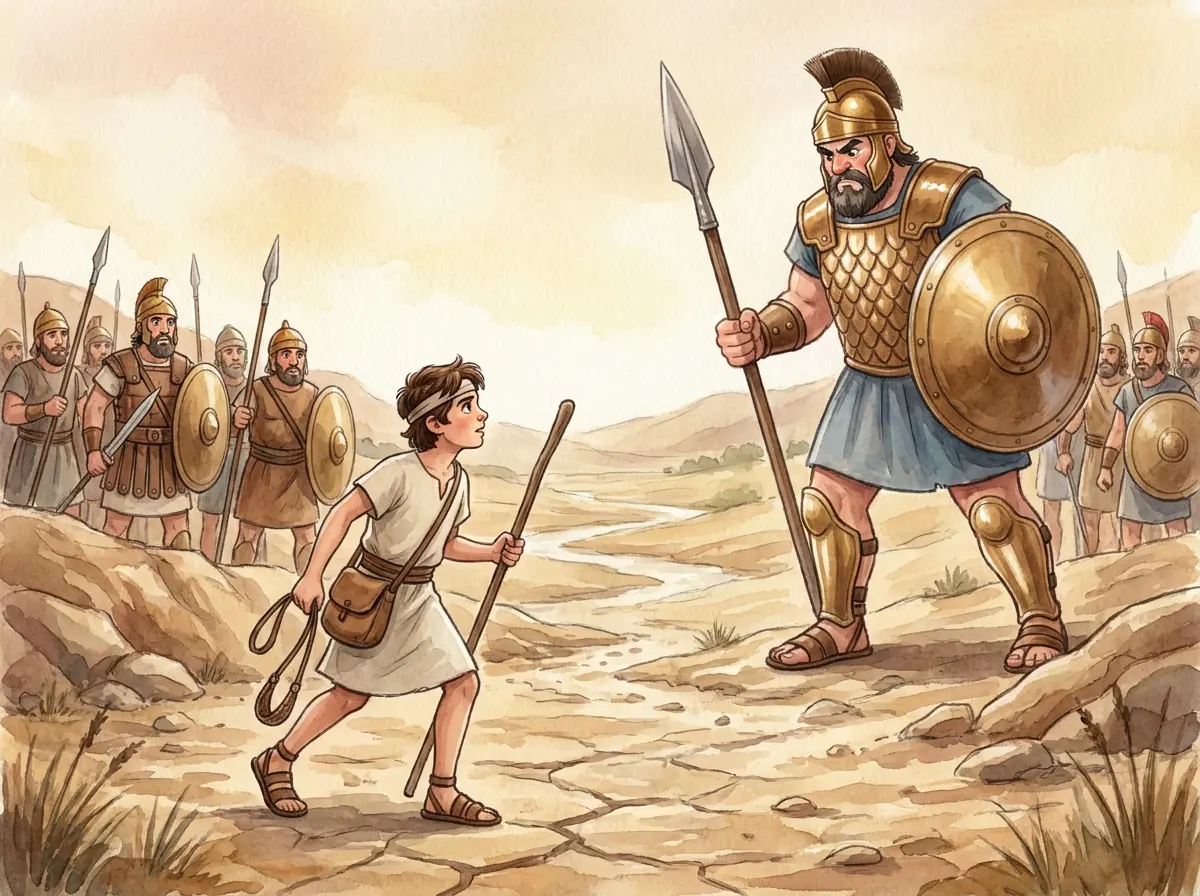
The Story of David and Goliath


“David said, ‘The LORD who delivered me out of the paw of the lion, and out of the paw of the bear, he will deliver me out of the hand of this Philistine.’ Saul said to David, ‘Go! The LORD will be with you.’”
1 Samuel 17:37
“He took his staff in his hand, and chose for himself five smooth stones out of the brook, and put them in the pouch of his shepherd’s bag which he had. His sling was in his hand; and he came near to the Philistine.”
1 Samuel 17:40
“Then David said to the Philistine, ‘You come to me with a sword, with a spear, and with a javelin; but I come to you in the name of the LORD of Armies, the God of the armies of Israel, whom you have defied.”
1 Samuel 17:45
Quotations from the World English Bible (public domain). Read the full passage together in your own family Bible. The reference is 1 Samuel 17.
“…the LORD doesn’t save with sword and spear; for the battle is the LORD’s…”
1 Samuel 17:47
World English Bible.
David and Goliath teaches children that courage begins with trust in God. Even when a problem looks too big, God will make a way.
- 01Kids quickly understand the underdog feeling of a small child facing a giant.
- 02It gives children language for bravery, trust, and standing up for what is right.
- 03King David has many stories in the Bible with lessons that deepen as they get older.
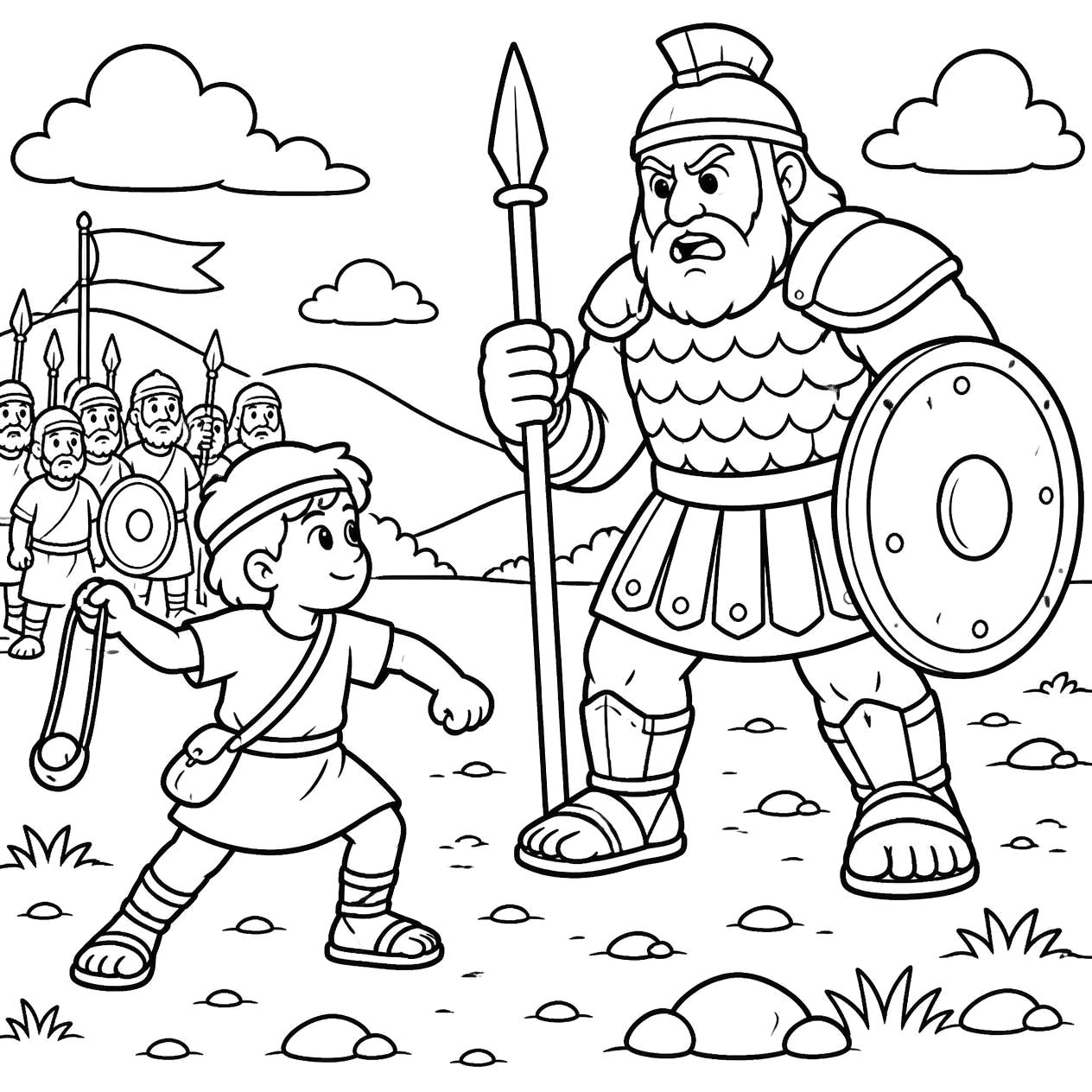

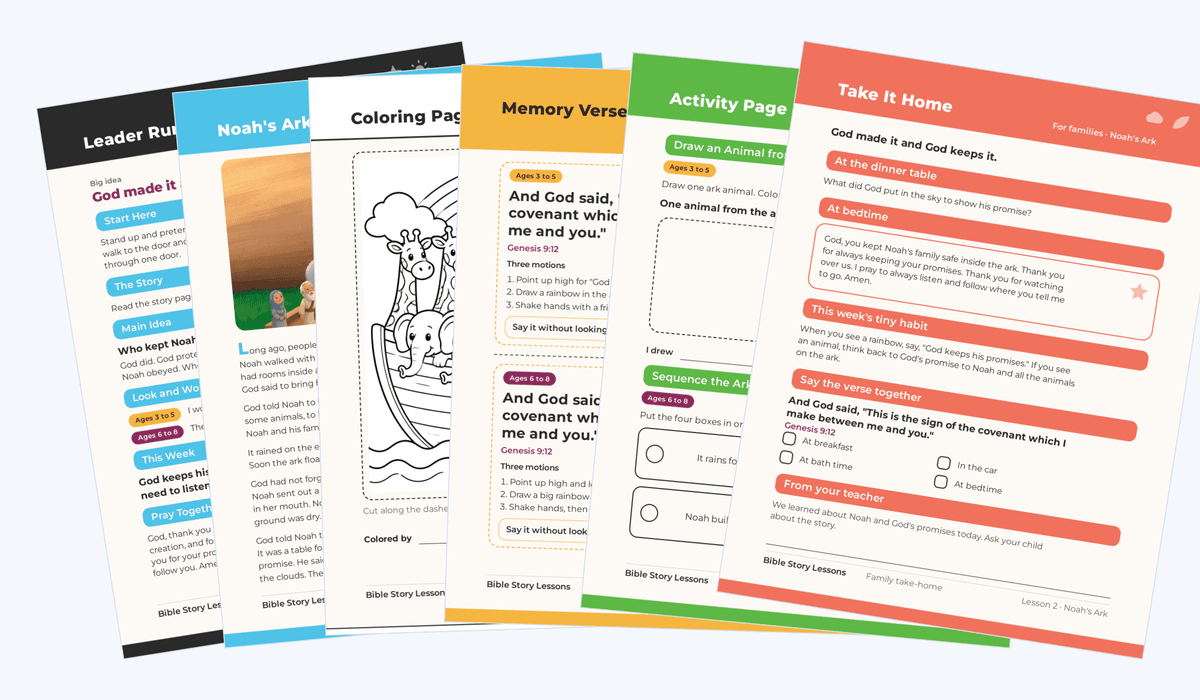
This story is one of twelve lessons in our Starter Pack.
Our Bible Story Lessons Starter Pack has twelve printable lessons for home or church. Try the Noah’s Ark lesson free: seven printable pages, sent to your inbox. See the Starter Pack →
We’ll also send a few emails over the next couple of weeks with lessons, printables and our books. Unsubscribe anytime.
The animated version.
An original, vintage-style illustrated retelling from Childhood Bible Stories, made for young children.
The kind of things parents wonder.
How did David beat Goliath?
David beat Goliath with a sling and a single smooth stone. He did not wear the king's heavy armor. He simply trusted God, ran toward the giant, and the stone struck Goliath so that he fell.
Why did David fight Goliath?
Goliath, a giant Philistine warrior, taunted God and Israel's army for forty days and no soldier would face him. David could not stand to hear God mocked, so he volunteered, believing God would help him.
How big was Goliath in the Bible?
The Bible describes Goliath as 'six cubits and a span' tall, roughly nine feet, taller than any grown man. That is why the soldiers were so afraid and why David's victory was so amazing.
What is the lesson of David and Goliath for kids?
The lesson is that courage comes from trusting God. David was not the biggest person on the field, but he believed God would help him do what was right.
Why is David and Goliath a good story for children?
It is a strong story for children because it is easy to picture, emotionally clear, and full of hope. Kids connect with the idea of being small but still able to be brave.
What age can understand David and Goliath?
Preschoolers can enjoy the basic story, but kindergarteners and early elementary kids often understand the bravery lesson especially well.
How to explain David and Goliath to a child?
Tell it in four beats and let each one land. First, a giant shouted at God's army every morning and every evening for forty days, and nobody would face him. Second, a shepherd boy named David arrived with food for his brothers and could not understand why everyone was so afraid, because God was bigger than the giant. Third, David turned down the king's armor and walked out with his staff, his sling, and five smooth stones from the brook. Fourth, one stone was enough, and Israel was safe. Then say the sentence you want your child to keep: David was brave because he was sure God was with him, not because he was big.
How old was David when he slew Goliath?
Scripture never gives his age, so any exact number you have heard is a guess rather than something the Bible says. What the text does tell us is that he was young. Saul says, 'you are but a youth, and he a man of war from his youth' (1 Samuel 17:33), and when Goliath looks him over he sees 'but a youth, and ruddy, and had a good looking face' (1 Samuel 17:42). He was old enough to be trusted alone with his father's sheep and to have fought off a lion and a bear, and young enough that grown soldiers thought the whole idea was absurd. For children, 'old enough to have a job, too young for the army' is the honest answer.
Where is the story of David and Goliath in the Bible?
It is 1 Samuel 17, in the Old Testament, and it fills one long chapter. If reading all of it in one sitting is too much, verses 1 to 11 give you the giant and the terrified army, verses 32 to 40 give you David's answer to the king and the five stones, and verses 45 to 50 give you his words to Goliath and the throw.
Why did David refuse to wear King Saul's armor?
Because he had never worn it. The text is plain about this: Saul dressed him in his own clothing, a helmet, and a coat of mail, David strapped on a sword and tried to walk, and he told Saul he could not go in them because he had not tested them (1 Samuel 17:38 to 39). So he took it all off and went out with the tools he used every day as a shepherd. That is worth pointing out to a child who thinks being brave means turning into somebody else. God used what David already knew how to do.
Why did David pick up five stones if he only needed one?
The Bible does not say, and it is better to tell children that honestly than to invent a reason. 1 Samuel 17:40 simply reports that he chose five smooth stones out of the brook and put them in his shepherd's bag. The plainest reading is that he prepared carefully, the way anyone sensible would, and that God did not need all five. Trusting God and getting ready are not opposites.
Is David and Goliath too violent for young children?
It does not have to be. The Bible gives one verse to the stone and the fall and many more to the forty days of fear and the conversation with the king, so a retelling for children can keep the same proportions. Say that the stone struck Goliath, that he fell, and that the battle was over, then move back to what God did. Children who ask a follow-up question are usually checking that the danger is finished, and it is.
Conversation starters.
Questions to ask after you read together. No right answers, just good conversation.
How big do you think Goliath really was? What would it feel like to stand in front of him?
Everyone else was afraid. Why do you think David wasn't scared the same way?
Can you think of something that feels like a 'giant' to you right now?
David said God had helped him before. How does remembering that help when something hard comes?
Teaching this story.
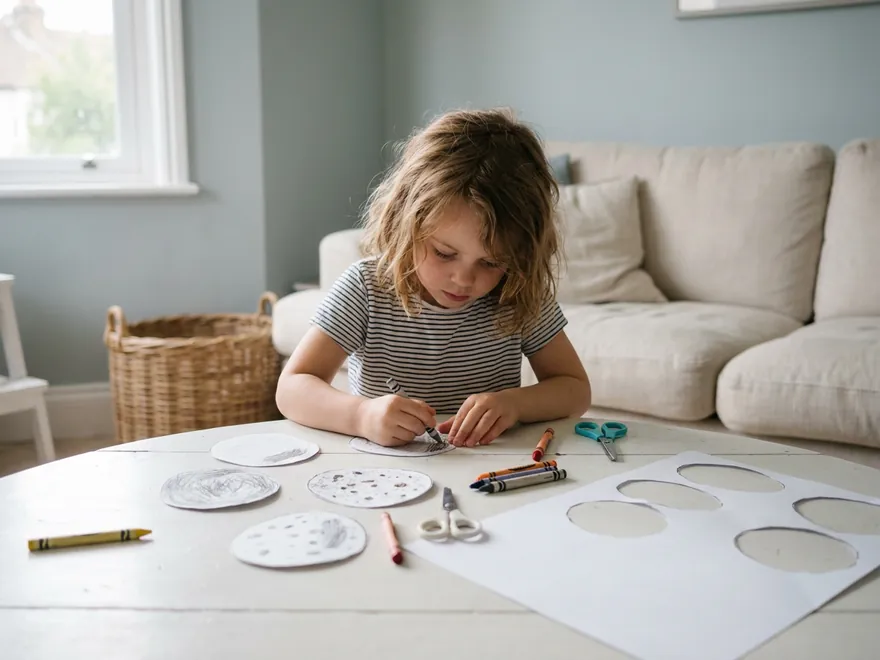
- 01Make David’s stones. Draw five smooth, round stones on a sheet of paper and help your child cut them out, just like the five David chose from the stream.
- 02Make them their own. Let your child color each stone with markers, colored pencils, or crayons. Bright, bold, or speckled like the real thing, every stone is welcome.
- 03Hide and hunt. While the children close their eyes, scatter the stones around a room or classroom, then send them off like shepherds searching the valley.
- 04Name the giant. Once all five stones are found, gather together and ask each child to name one big thing God can help them overcome, the way He helped David.
Five smooth stones
On your next walk, hunt for five smooth stones and wash them at home. Paint one word on each (brave, trust, pray, remember, God) and keep them in a sock or small drawstring bag as a shepherd's pouch. One stone in a pocket on a scary day, like the first day of school, does a surprising amount of quiet work.
Measure a giant
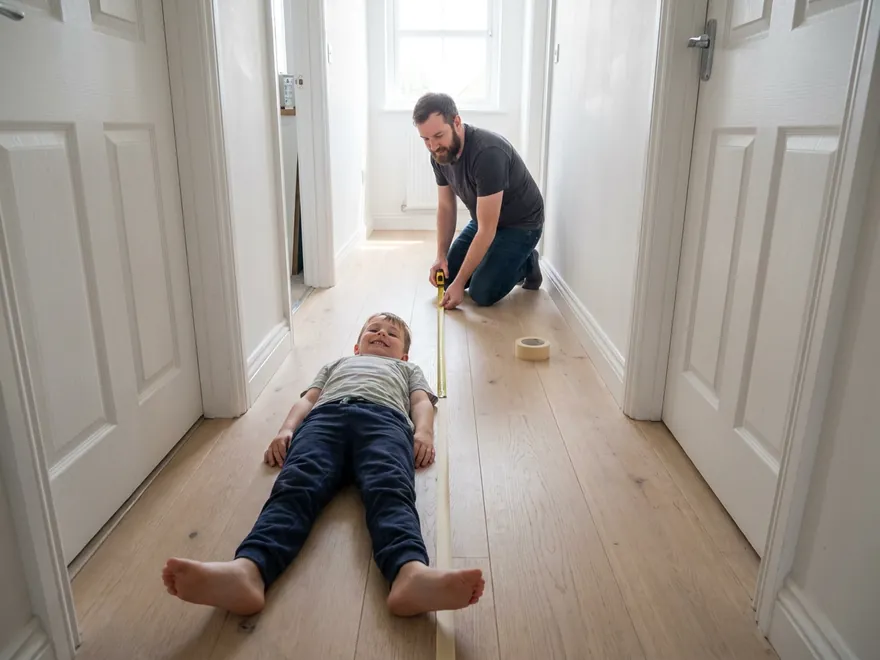
Run a strip of masking tape nine feet along the hallway floor, Goliath's height, straight from the Bible's “six cubits and a span.” Have everyone in the family lie down beside it, tallest to smallest. Seeing that even the tallest grown-up in the house falls three feet short makes David's courage suddenly very real.
Keep exploring.
Bible Stories in Chronological Order for Kids
See where this story fits in the full Genesis-to-Revelation reading plan: 27 stories in order with summaries, ages, and a free printable.
Browse →Kindergarten Bible Stories
See other simple Bible stories for children who are just beginning to read and retell stories on their own.
Browse →Old Testament Bible Stories
Explore more Old Testament heroes, promises, and adventures for Christian families.
Browse →More stories: Daniel and the Lions · Jonah and the Whale
Story 12 of 27 in the reading plan
These Bible story retellings are based directly on Scripture and written for children ages 3–8. Each page includes its Scripture reference so families can read the original passage together. Written and edited by Hannah Whitford. Quotations are verbatim from the World English Bible; each retelling is checked against the passage.