This guide covers 27 essential stories in the order they appear in the Bible. Each entry includes the Bible reference, a recommended age, a one-sentence summary, and the main themes, so families and Sunday school teachers can plan a reading sequence that builds context story by story.
What order do Bible stories go in for kids?
Read Bible stories in the order they happen in Scripture, starting in the Old Testament and ending with the life of Jesus in the New Testament. A simple 27-story sequence for children is:
- Creation (Genesis 1–2)
- Adam and Eve (Genesis 2–3)
- Noah’s Ark (Genesis 6–9)
- Abraham and the Promise (Genesis 12–21)
- Leah and Rachel (Genesis 29–35)
- Joseph and His Brothers (Genesis 37–45)
- Baby Moses (Exodus 2)
- Moses and the Burning Bush (Exodus 3)
- Crossing the Red Sea (Exodus 13–15)
- Samson and Delilah (Judges 13–16)
- Ruth and Boaz (Ruth 1–4)
- David and Goliath (1 Samuel 17)
- David and Jonathan (1 Samuel 18–20)
- Shadrach, Meshach and Abednego (Daniel 3)
- Daniel and the Lions’ Den (Daniel 6)
- Jonah and the Whale (Jonah 1–4)
- The Birth of Jesus (Luke 2)
- Jesus Feeds 5,000 (John 6)
- The Lost Sheep (Luke 15)
- The Good Samaritan (Luke 10)
- The Parable of the Sower (Matthew 13)
- Martha and Mary (Luke 10)
- The Prodigal Son (Luke 15)
- Jesus Heals Ten Lepers (Luke 17)
- Zacchaeus (Luke 19)
- Palm Sunday (Matthew 21)
- Easter: Death and Resurrection (Matthew 27–28)
For very young children (ages 3–4), you can begin with Creation, Noah’s Ark, Baby Moses, the Birth of Jesus, and the Lost Sheep, then add the others as they grow.
Start the plan with story 1: Creation → Every story page carries a Previous and an Up next link, so you can work straight through all 27 without coming back here.
Bible Stories in Order from Genesis to Revelation for Kids: Seven Eras
The Bible is one big story told across many books. When children can picture the whole arc, from the very beginning in Genesis to God making everything new in Revelation, each individual story has a place to belong. These seven eras are a simple map of that journey.
1. Beginnings
Genesis 1–11Creation, the first family, and Noah's Ark. God makes a good world and stays faithful even when people turn away.
Stories in this guide: Creation, Adam and Eve, Noah's Ark
2. The Family of Promise
Genesis 12–50God calls Abraham and keeps His promise through the generations of one family: Isaac, Jacob, and Joseph.
Stories in this guide: Abraham, Rachel and Leah, Joseph
3. Rescue and the Law
Exodus – DeuteronomyGod rescues His people from Egypt through Moses and teaches them how to live as His own.
Stories in this guide: Baby Moses, Moses and the Burning Bush, Crossing the Red Sea
4. The Kingdom
Joshua – 2 ChroniclesGod's people settle the promised land and are led by judges and kings like David, the shepherd who trusted God.
Stories in this guide: Samson, Ruth and Boaz, David and Goliath, David and Jonathan
5. Exile and Return
Ezra – MalachiGod's people are carried far from home, yet brave believers like Daniel keep praying and God keeps watching over them.
Stories in this guide: Shadrach, Meshach and Abednego, Daniel, Jonah
6. Jesus
Matthew – JohnGod becomes one of us. Jesus is born, teaches with parables, performs miracles, dies, and rises again at Easter.
Stories in this guide: Birth of Jesus, Feeds 5,000, Good Samaritan, The Sower, Prodigal Son, Zacchaeus, Easter
7. The Church and the Promise
Acts – RevelationJesus' followers carry the good news to the whole world, and Revelation ends the Bible with God's promise to make everything new.
Stories in this guide: (read together as children grow)
27-week Bible reading plan for kids
Print a simple one-page checklist of all 27 stories in order, with a box to color in after each one. It turns this guide into a six-month family or Sunday school reading routine your child can follow and feel proud of.
Every page here is free. Enter your email once and every printable on the site unlocks, plus we will send you our ten-favorite starter pack.
Looking for more? See all our free Bible printables and coloring pages.
A prayer book with your child's name in it
When bedtime reading becomes a habit, Little Prayers is the keepsake to go with it: ten gentle prayers, each paired with a verse, with your child drawn into every spread and their name on the cover.
Ten of these stories are also in a personalized Bible story book your child's name runs through.
Old Testament Stories in Order
Creation
Genesis 1–2Ages 3+God creates the world in six days: light, sky, land, creatures, and finally people made in His image. Everything is good.
Adam and Eve
Genesis 2–3Ages 4+God places the first man and woman in a beautiful garden. One sad choice changes everything, but God's love and care for them never stops.
Noah's Ark
Genesis 6–9Ages 3+God asks Noah to build a massive ark and fill it with animals before a great flood. A rainbow seals God's promise to care for His creation.
Abraham and the Promise
Genesis 12–22Ages 5+God calls Abraham to leave everything and follow Him, promising to make him the father of a great nation. Abraham trusts God even when it is hard.
Rachel and Leah
Genesis 29–35Ages 6+Jacob loves Rachel deeply and works seven years to marry her. Leah, her older sister, feels overlooked, but God sees both of them.
Joseph and His Brothers
Genesis 37–45Ages 4+Joseph's brothers sell him away out of jealousy, but God stays with him in Egypt and turns the worst day into a rescue for the whole family.
Baby Moses
Exodus 1–2Ages 3+A Hebrew mother places her baby in a basket on the river to protect him. God watches over Moses and begins preparing him for a larger purpose.
Moses and the Burning Bush
Exodus 3Ages 4+A shepherd turns aside to look at a bush that burns without burning up. God calls him by name, tells him the ground is holy, and sends him back to Egypt.
Crossing the Red Sea
Exodus 13–15Ages 3+Trapped between the sea and Pharaoh's army, God's people watch Him open a dry path straight through the water.
Samson and Delilah
Judges 13–16Ages 6+God gives Samson astonishing strength to help rescue his people, but Samson gives away the secret behind it. Even after his mistake, God hears his final prayer.
Ruth and Boaz
Ruth 1–4Ages 4+A loyal young widow will not leave the mother-in-law she loves. Her kindness and hard work quietly lead her into the family of King David.
David and Goliath
1 Samuel 17Ages 4+A young shepherd boy faces a terrifying giant and wins, not through size or weapons, but through faith in God.
David and Jonathan
1 Samuel 18–20Ages 6+Jonathan, the king's son, gives up his own interests to protect his friend David. One of Scripture's greatest pictures of loyal friendship.
Shadrach, Meshach and Abednego
Daniel 3Ages 5+Three friends will not bow to a golden image, whatever it costs them. Thrown into a fiery furnace, they walk out unharmed, and they were not in there alone.
Daniel and the Lions' Den
Daniel 6Ages 4+Daniel refuses to stop praying even when a new law says it is forbidden. God protects him through a night in a lions' den.
Jonah and the Whale
Jonah 1–4Ages 3+God asks Jonah to go deliver a message. Jonah runs the other direction, ends up inside a great fish, and learns that God's patience leads to second chances.
New Testament Stories in Order
The Birth of Jesus
Luke 2 / Matthew 1–2Ages 3+God becomes a baby in a manger in Bethlehem. Shepherds hear the news first. Wise men travel a great distance to find the child.
Jesus Feeds 5,000 People
John 6 / Matthew 14Ages 3+A boy shares his small lunch with Jesus (five loaves and two fish) and Jesus multiplies it to feed thousands with baskets left over.
The Lost Sheep
Luke 15:3–7Ages 3+A shepherd leaves 99 sheep to search for the one that went missing. He finds it and celebrates. It is a picture of how God pursues every person.
The Good Samaritan
Luke 10:25–37Ages 3+A hurt traveler is passed by twice, until an unexpected stranger stops, bandages his wounds, and pays for his care.
The Parable of the Sower
Matthew 13Ages 4+A farmer scatters seed on a path, on rocky ground, among thorns and on good soil. Jesus explains what each kind of ground says about the way we listen.
Martha and Mary
Luke 10:38–42Ages 6+Martha works hard to serve Jesus while Mary sits and listens. Jesus gently tells Martha that being present with Him is the most important thing.
The Prodigal Son
Luke 15:11–32Ages 4+A son takes his inheritance and leaves home, then learns that his father has been watching the road, ready to run to him, all along.
Jesus Heals Ten Lepers
Luke 17:11–19Ages 5+Ten people are healed of a terrible skin disease. Only one comes back to thank Jesus, and Jesus notices.
Zacchaeus
Luke 19:1–10Ages 3+A short tax collector climbs a sycamore tree to see Jesus over the crowd. Jesus stops underneath it, calls him by name, and comes to his house.
Palm Sunday
Matthew 21 / Luke 19Ages 4+Jesus enters Jerusalem on a donkey. Crowds wave palm branches and shout 'Hosanna!', welcoming their king in a way they do not yet fully understand.
Easter: Death and Resurrection
Matthew 27–28 / Luke 24Ages 4+Jesus is crucified and buried, and three days later He rises from the dead. The most important event in all of human history.

After the whole story, a book starring your child.
Little Prayers is our keepsake prayer book, personalized to your child on the cover and in every scene. Built once, printed just for them.
How to use this sequence with children.
One story per week
Reading one story per week gives children time to absorb each account before moving on. At 27 stories, that is a full six-month family Bible reading plan.
Ask one question after each story
A single question, such as 'What did you notice?' or 'What does this tell us about God?', is more memorable than a long discussion. Young children especially benefit from simplicity.
Revisit favorites
Bible stories are meant to be returned to. Many families find that children understand something new in a familiar story each time they revisit it at a different age.
Common questions.
What order should I read Bible stories to my child?
A simple approach is to follow the Bible's own order: start with Creation in Genesis, then move through the Old Testament (Noah, Abraham, Moses, David, Daniel, Jonah) before introducing the New Testament stories of Jesus. Most children's Bible storybooks follow this sequence naturally.
How many Bible stories are there for kids?
There is no fixed list, but most children's Bibles retell between 50 and 200 stories depending on depth. A manageable starting point for young children is 10 to 15 key stories, enough to build a solid foundation without overwhelming the reading routine.
Should I read the Old Testament or New Testament first with my child?
Most families start with the Old Testament because it provides context for the New Testament. However, starting with the life of Jesus and working backward is also common, especially for very young children who may connect more immediately with the Gospels.
What is the first Bible story for kids?
The first Bible story for most children is the Creation story from Genesis 1 and 2. It introduces God as creator, establishes that everything is good, and is accessible for very young children. Many first Bible board books begin here.
What Bible stories should a kindergartener know?
A solid kindergarten Bible foundation includes Noah's Ark, David and Goliath, Daniel and the Lions' Den, the birth of Jesus, and the parable of the Lost Sheep. These five stories cover key themes of trust, bravery, prayer, incarnation, and God's love for every person.
What are the Bible stories in order from Genesis to Revelation for kids?
From Genesis to Revelation, a kid-friendly order is: Creation and Noah's Ark (Genesis), Abraham and Baby Moses (Genesis–Exodus), David and Goliath and Daniel (the kingdom and exile), then into the New Testament with the birth of Jesus, His parables and miracles, Easter, and finally the promise of God making everything new in Revelation. The 27-story list on this page follows that same Genesis-to-Revelation flow, grouped into seven simple eras so children can see how the whole Bible fits together.
Is 'Bible stories in order' the same as chronological order?
Almost, but not exactly. 'In order' usually means the order the books appear in the Bible, which for the main story events is very close to chronological. A few books are placed by type rather than by date. For example, Job is grouped with the poetry books but the events likely happened during the time of Abraham. For children, following the Bible's own book order works well and avoids confusion; the small differences matter more for older students and adults.
Prefer to hold the whole story in your hands?
A single storybook Bible follows this same Genesis-to-Revelation flow in one sitting-friendly volume. These are the two we point families to most: one for the earliest years, one that ties every story back to Jesus.
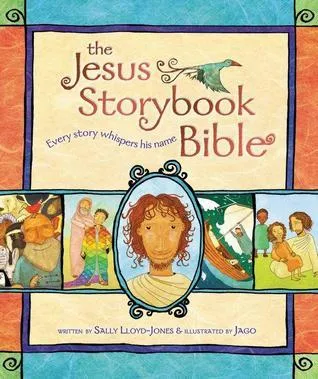 Ages 4-8 years
The Jesus Storybook Bible: Every Story Whispers His Name
by Sally Lloyd-Jones
A beautifully illustrated Bible storybook that presents every story as part of God's great rescue plan. Perfect for bedtime with its gentle, lyrical storytelling.
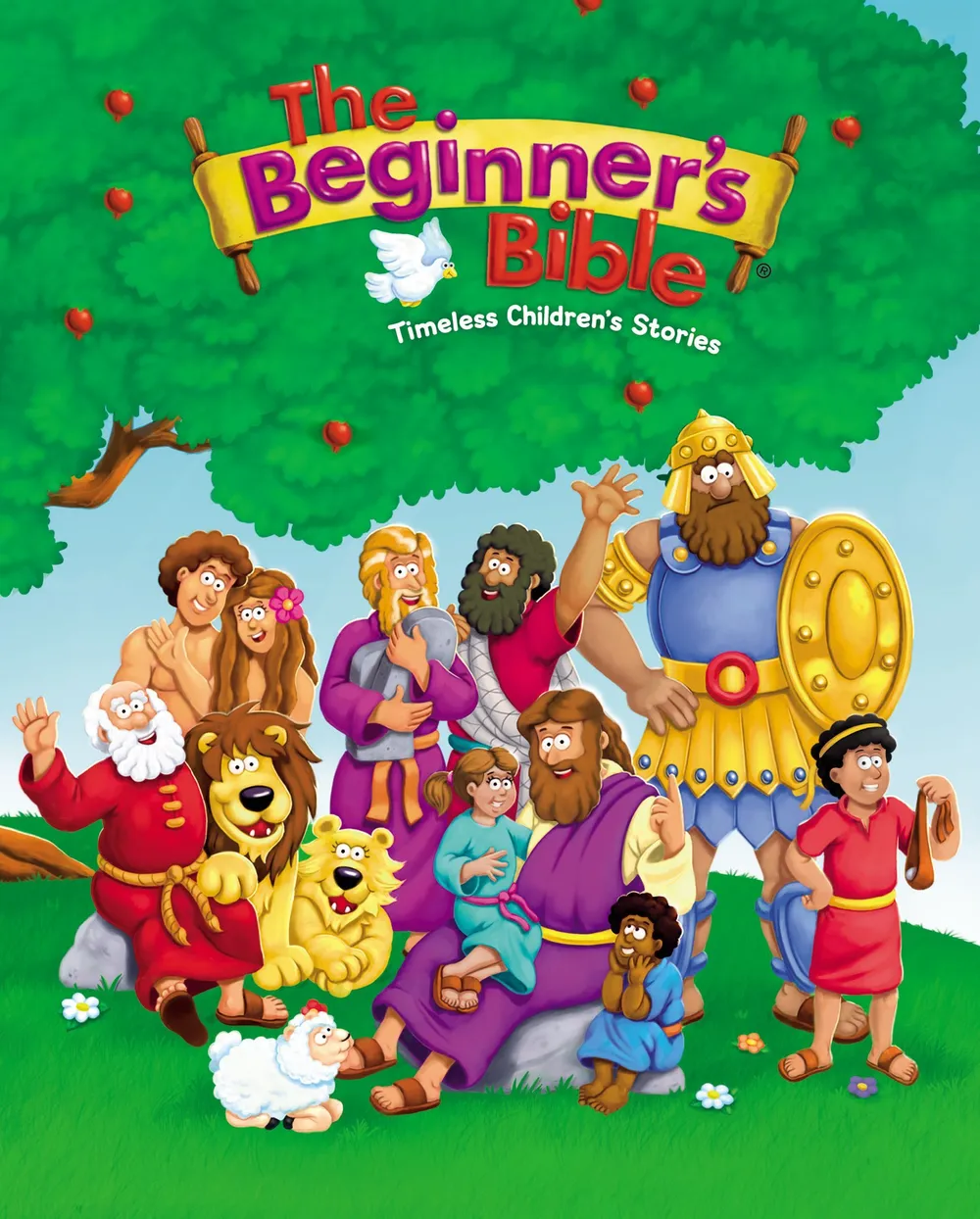 Ages 2-6 years
The Beginner's Bible: Timeless Children's Stories
by Zondervan
Classic Bible stories retold in simple language with bright, engaging illustrations. Short stories perfect for winding down before sleep.
As an Amazon Associate we earn from qualifying purchases. Prices shown are a guide; check the current price on Amazon.
Take ten printables home
Our favorite ten coloring pages and verse cards, free in one pack, sent to your inbox.
How many stories, which ones, and which book.
The four questions families ask once they have decided to read the Bible together and want to know what they are signing up for.
What are the 17 stories of the Bible for kids?
There is no official list of seventeen. The number circulates because a lot of Sunday school curriculums and toddler Bibles happen to run to about that many core stories, but Scripture never sets a count and no two published lists agree. If you want a workable seventeen drawn from the twenty-seven on this page, this set covers Genesis to the resurrection without leaving a gap: Creation, Adam and Eve, Noah's Ark, Abraham and the Promise, Joseph and His Brothers, Baby Moses, Crossing the Red Sea, Ruth and Boaz, David and Goliath, Daniel and the Lions' Den, Jonah and the Whale, the Birth of Jesus, Jesus Feeds 5,000, the Lost Sheep, the Good Samaritan, the Prodigal Son, and Easter. Add the remaining ten as your child grows.
What are the 10 most popular Bible stories?
The ten retold most often for children, and the ones you will find in almost any children's Bible, are Creation, Noah's Ark, Baby Moses, David and Goliath, Daniel and the Lions' Den, Jonah and the Whale, the Birth of Jesus, Jesus Feeds 5,000, the Lost Sheep, and Easter. They earn their place for a reason: each one has a single clear picture a young child can hold onto, whether that is a boat full of animals, a basket on a river, or an empty tomb. All ten are on this page with their Scripture references.
What are some five-minute Bible stories for kids?
The parables and the short accounts are the ones to reach for when there are five minutes before lights out. The Lost Sheep is five verses long (Luke 15:3–7). Martha and Mary is five (Luke 10:38–42). Jesus Heals Ten Lepers is nine (Luke 17:11–19), the Good Samaritan is thirteen (Luke 10:25–37), and Baby Moses is ten (Exodus 2:1–10). Each of those reads aloud gently in about five minutes with time left for one question afterwards. The longer accounts, such as Joseph or Samson, are better saved for a night when nobody is watching the clock.
What is the best Bible storybook for kids?
It depends on the age at the table, so we point families to two rather than one. The Beginner's Bible suits ages two to six: short retellings, big pictures, and enough of them to last for years. The Jesus Storybook Bible suits ages four to eight and ties every story back to Jesus, which is what makes it worth rereading. Both follow the same Genesis-to-Revelation flow as this page, so either one works as the book alongside this reading plan. Prices move, so check the current price before you buy.
As an Amazon Associate we earn from qualifying purchases. It keeps every story and printable on this site free.
Ready to start reading?
Begin with Noah's Ark or David and Goliath, then work your way through the list at whatever pace fits your family.