The Lost Sheep Bible Story for Kids.
The Lost Sheep is one of Jesus' most beloved parables. It teaches children that God never gives up on anyone, and that every single person matters deeply to Him.
Retold by Hannah Whitford · Luke 15:3–7 · Updated September 2026
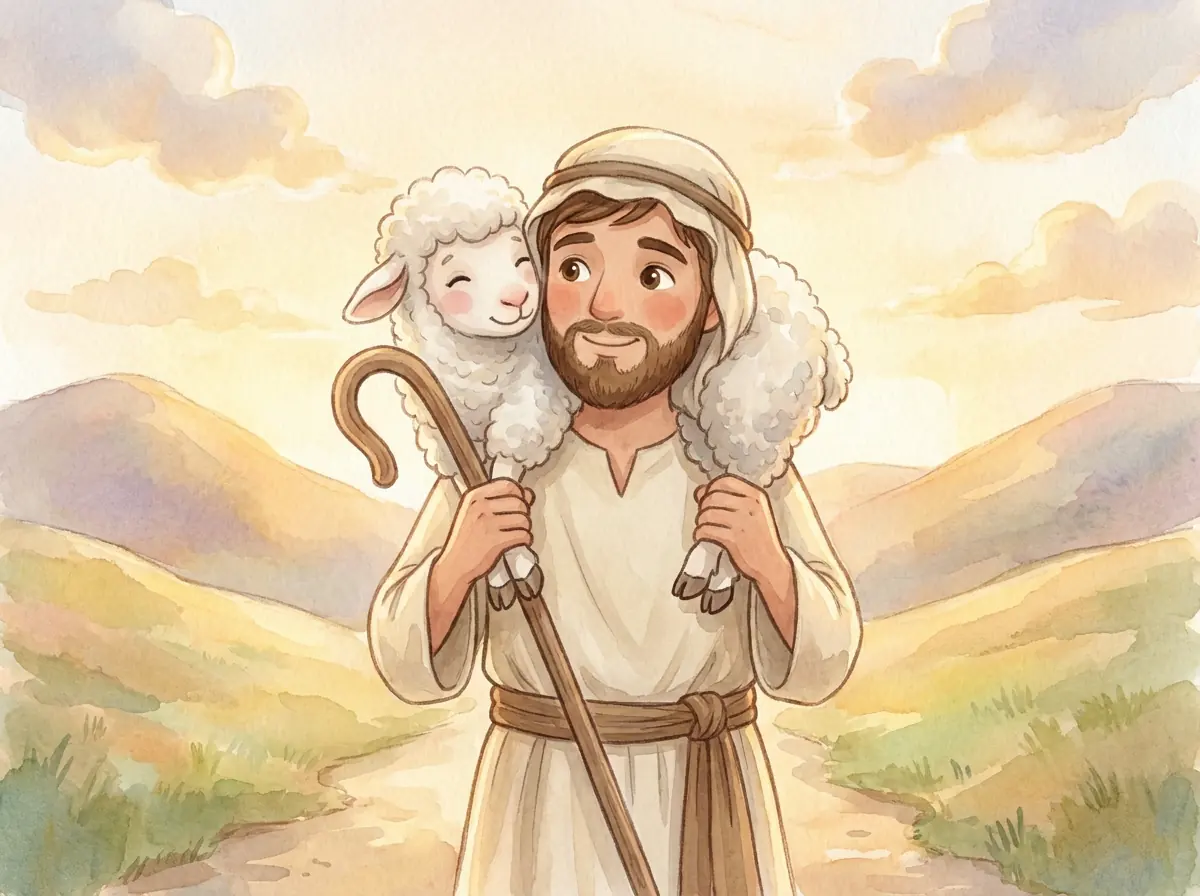
The Story of the Lost Sheep


“Which of you men, if you had one hundred sheep, and lost one of them, wouldn’t leave the ninety-nine in the wilderness, and go after the one that was lost, until he found it?”
Luke 15:4
“When he comes home, he calls together his friends and his neighbors, saying to them, ‘Rejoice with me, for I have found my sheep which was lost!’”
Luke 15:6
“I tell you that even so there will be more joy in heaven over one sinner who repents, than over ninety-nine righteous people who need no repentance.”
Luke 15:7
Quotations from the World English Bible (public domain). Read the full passage together in your own family Bible. The reference is Luke 15:3–7.
“When he has found it, he carries it on his shoulders, rejoicing.”
Luke 15:5
Jesus told this story about a shepherd who would not stop looking. It is even better learned with your child riding on your shoulders.
World English Bible.
The Lost Sheep teaches children that God searches for every person who feels lost or alone. No one is too far away, too small, or too forgotten for God to find and carry home.
- 01The image of a shepherd carrying a sheep is warm and easy for young children to picture.
- 02Children understand the feeling of being lost, and the relief of being found.
- 03The story ends with a celebration, which feels joyful and hopeful.
- 04It opens a natural conversation about how much God loves each child.
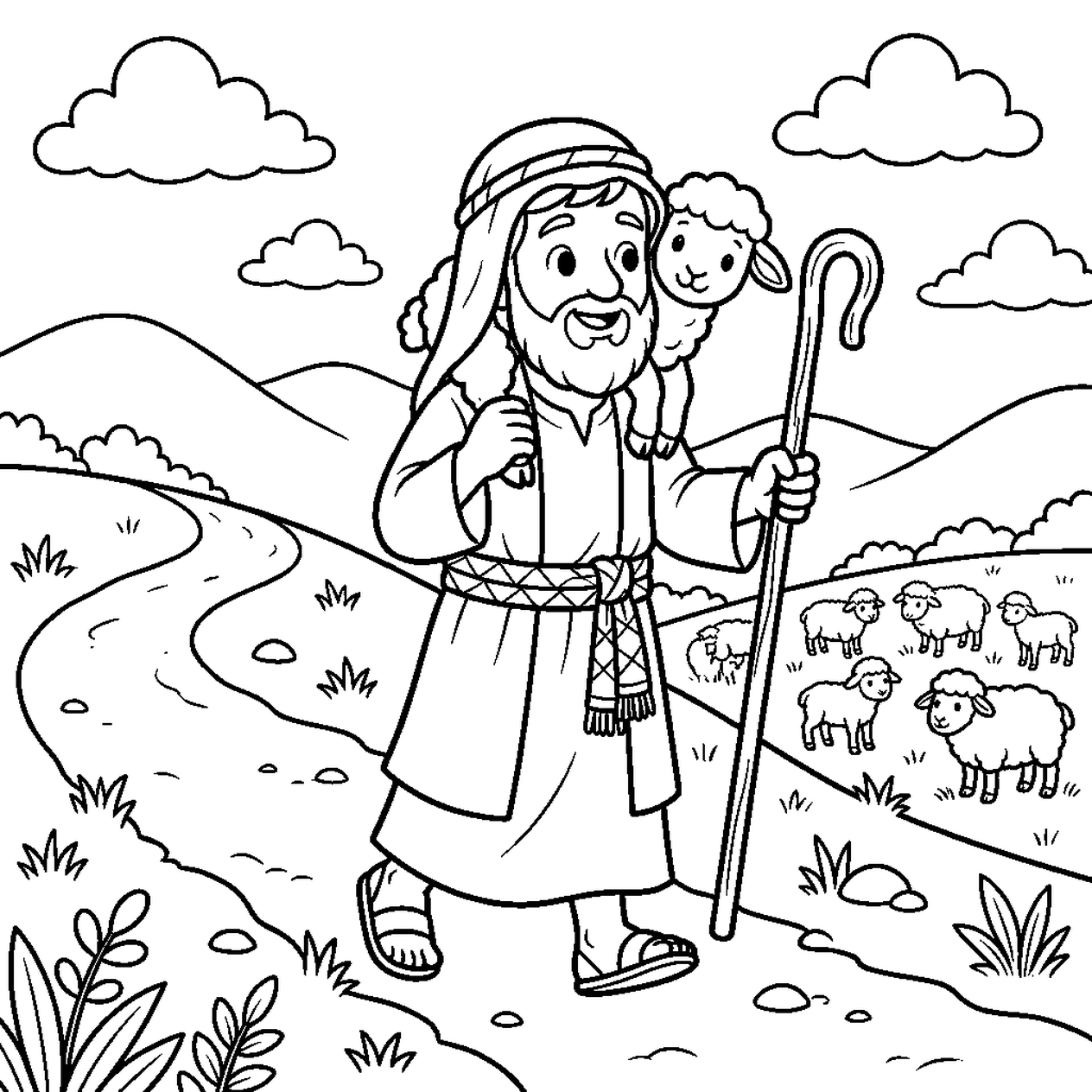

This story is one of twelve lessons in our Starter Pack.
Our Bible Story Lessons Starter Pack has twelve printable lessons for home or church. Try the Noah’s Ark lesson free: seven printable pages, sent to your inbox. See the Starter Pack →
We’ll also send a few emails over the next couple of weeks with lessons, printables and our books. Unsubscribe anytime.

The kind of things parents wonder.
What is the lesson of the Lost Sheep parable for kids?
The lesson is that God loves every person individually and searches for anyone who is lost or far away. Children learn that they are never forgotten or unimportant to God.
What age is the Lost Sheep parable good for?
The parable works beautifully for toddlers and preschoolers because the shepherd-and-sheep image is concrete and gentle. Older children can explore the deeper meaning of what it means to be 'found' by God.
Where is the Lost Sheep parable in the Bible?
The parable of the Lost Sheep appears in Luke 15:3-7 and also in Matthew 18:12-14. Jesus uses it to show how much God values every single person.
Who does the shepherd represent in the Lost Sheep parable?
The shepherd represents God. Jesus told this parable while religious leaders were grumbling that He welcomed tax collectors and sinners (Luke 15:1-2). The searching shepherd was His answer: God goes looking for the very people others have written off.
What is the difference between the Lost Sheep in Luke 15 and Matthew 18?
It is the same picture told for two different audiences. In Luke 15, Jesus tells it to critics of His mercy and ends with the joy in heaven over one sinner who repents. In Matthew 18:12-14, He applies it to children: it is not the Father's will that even one of these little ones should perish. Either passage works well for family reading.
How do I explain what 'lost' means to a young child?
Keep it concrete: the sheep was lost, far away from the shepherd and the rest of the flock. Then connect it gently: people can wander from God too, and the good news of the parable is that God does not wait for the lost to find their own way home. He comes looking.
Conversation starters.
Questions to ask after you read together. No right answers, just good conversation.
Why do you think the shepherd left the 99 sheep to find just one?
When the shepherd found the lost sheep, how did he carry it home?
Jesus said each person matters to God like that lost sheep. What does that make you feel?
Have you ever lost something important and felt so relieved when you found it?
Teaching this story.
- 01Let your child do the counting. You don't need all 99. Count ten fingers together, tuck one down, and ask who's missing. The gap where a sheep should be is the whole parable for a three-year-old.
- 02Expect the question 'Was the sheep naughty for wandering off?' The parable never scolds the sheep, so you don't have to either. Keep the spotlight where Jesus put it: on the shepherd who goes looking.
- 03Slow down at the shoulders. The shepherd doesn't drag the sheep home or tell it off. He carries it. Little ones who still love being carried themselves will feel exactly what that means.
- 04With ages 3–5, let it stay a story about being found and carried home. Around 6–8, you can add Jesus' own ending: the joy in heaven over one person who comes back to God.
Cotton-Ball Sheep

Cut a simple cloud shape from a paper plate or cereal-box cardboard and let your child glue on cotton balls until it is properly woolly. Clip a clothespin to each bottom corner for legs so it stands up. This becomes the lost sheep for the game below.
Shepherd Hide-and-Seek
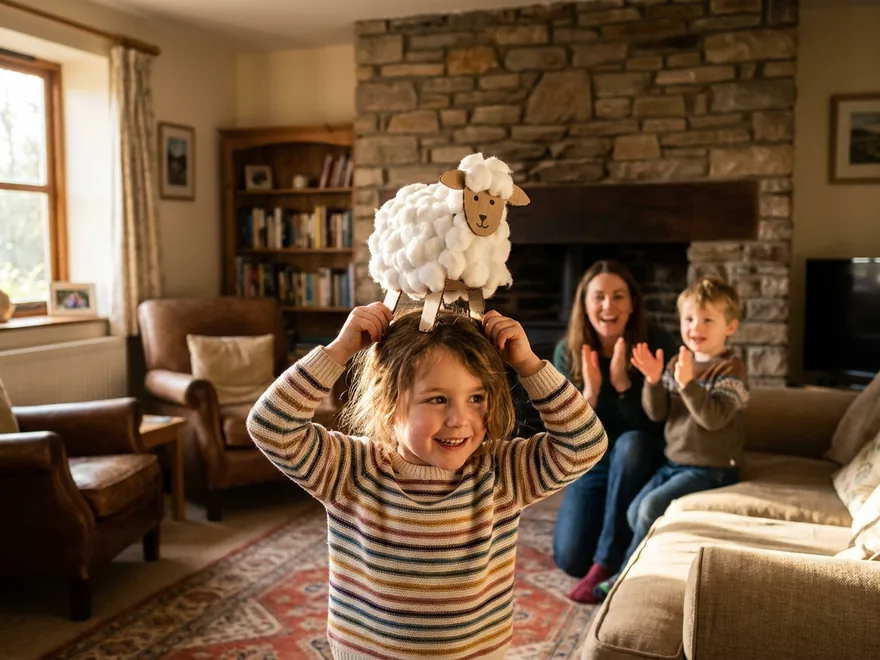
One person hides the cotton-ball sheep somewhere in the house while the shepherd waits. The shepherd searches until the sheep is found, then carries it home on their shoulders while everyone celebrates, just like the friends and neighbors in the story. Take turns; children love both roles.
Keep exploring.
Bible Stories in Chronological Order for Kids
See where this story fits in the full Genesis-to-Revelation reading plan: 27 stories in order with summaries, ages, and a free printable.
Browse →Bedtime Bible Stories
Find more gentle Bible stories for winding down with comfort and faith at bedtime.
Browse →Preschool Bible Stories
Browse simple, picture-rich Bible stories recommended for ages 2 to 5.
Browse →More stories: Ten Lepers · Mary and Martha
Story 19 of 27 in the reading plan
These Bible story retellings are based directly on Scripture and written for children ages 3–8. Each page includes its Scripture reference so families can read the original passage together. Written and edited by Hannah Whitford. Quotations are verbatim from the World English Bible; each retelling is checked against the passage.