Jesus Feeds 5000 Bible Story for Kids.
When a huge crowd followed Jesus to a hillside and grew hungry, a boy offered his small lunch of five loaves and two fish. Jesus took the little that was offered, gave thanks, and fed thousands of people.
Retold by Hannah Whitford · John 6 · Updated September 2026
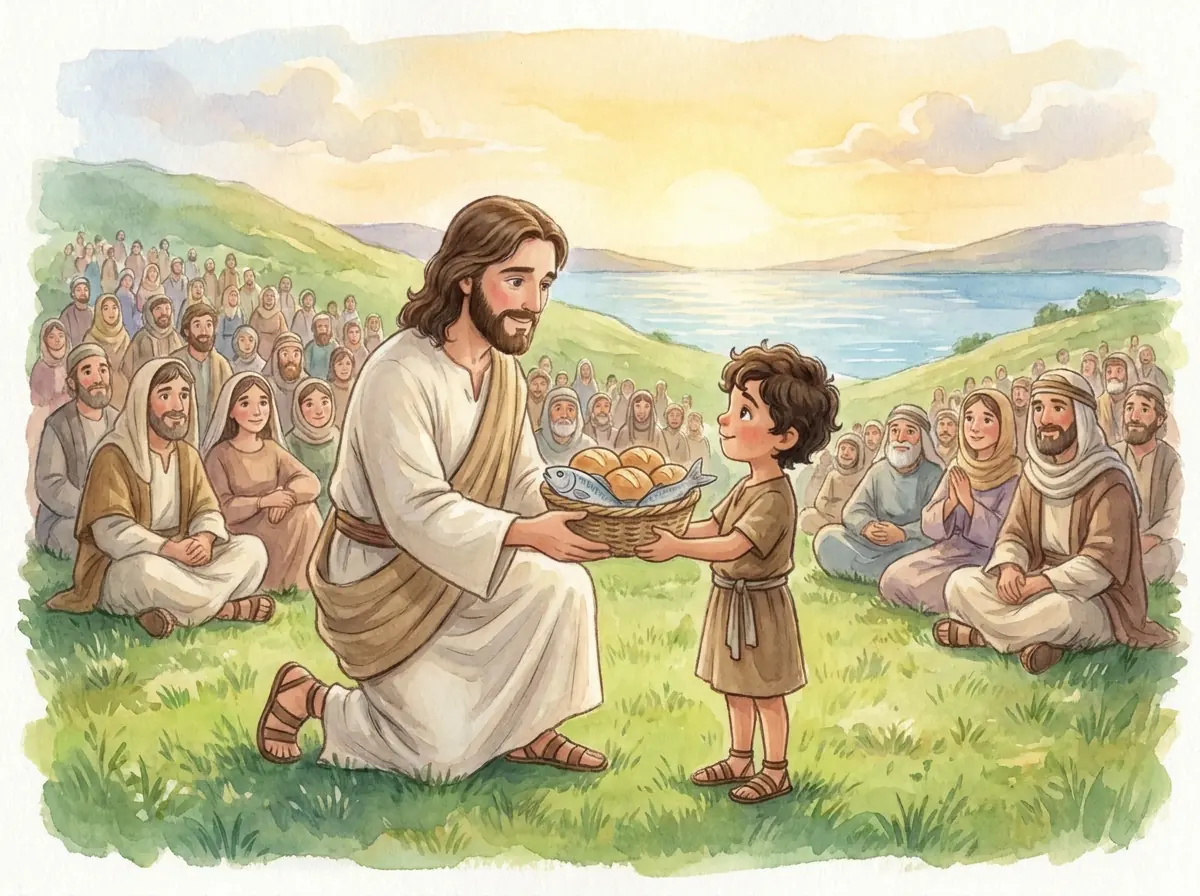
The Story of Jesus Feeding the 5,000


“There is a boy here who has five barley loaves and two fish, but what are these among so many?”
John 6:9
“Jesus took the loaves; and having given thanks, he distributed to the disciples, and the disciples to those who were sitting down; likewise also of the fish as much as they desired.”
John 6:11
“So they gathered them up, and filled twelve baskets with broken pieces from the five barley loaves, which were left over by those who had eaten.”
John 6:13
Quotations from the World English Bible (public domain). Read the full passage together in your own family Bible. The reference is John 6.
“I am the bread of life. He who comes to me will not be hungry…”
John 6:35
Jesus said this the day after He fed the crowd. It makes a good verse to say together before a meal.
World English Bible. Little ones can start with just the first line.
Jesus Feeds the 5000 teaches children that God can take the small things we offer and do something far greater than we can imagine. Generosity, even a small child's lunch, matters in God's hands.
- 01A child is the hero of the story. One boy's lunch changed everything.
- 02The miraculous multiplication of food sparks imagination and wonder.
- 03The idea of leftovers after feeding thousands gives children a satisfying sense of abundance.
- 04It naturally leads into conversations about generosity and what God can do with small gifts.
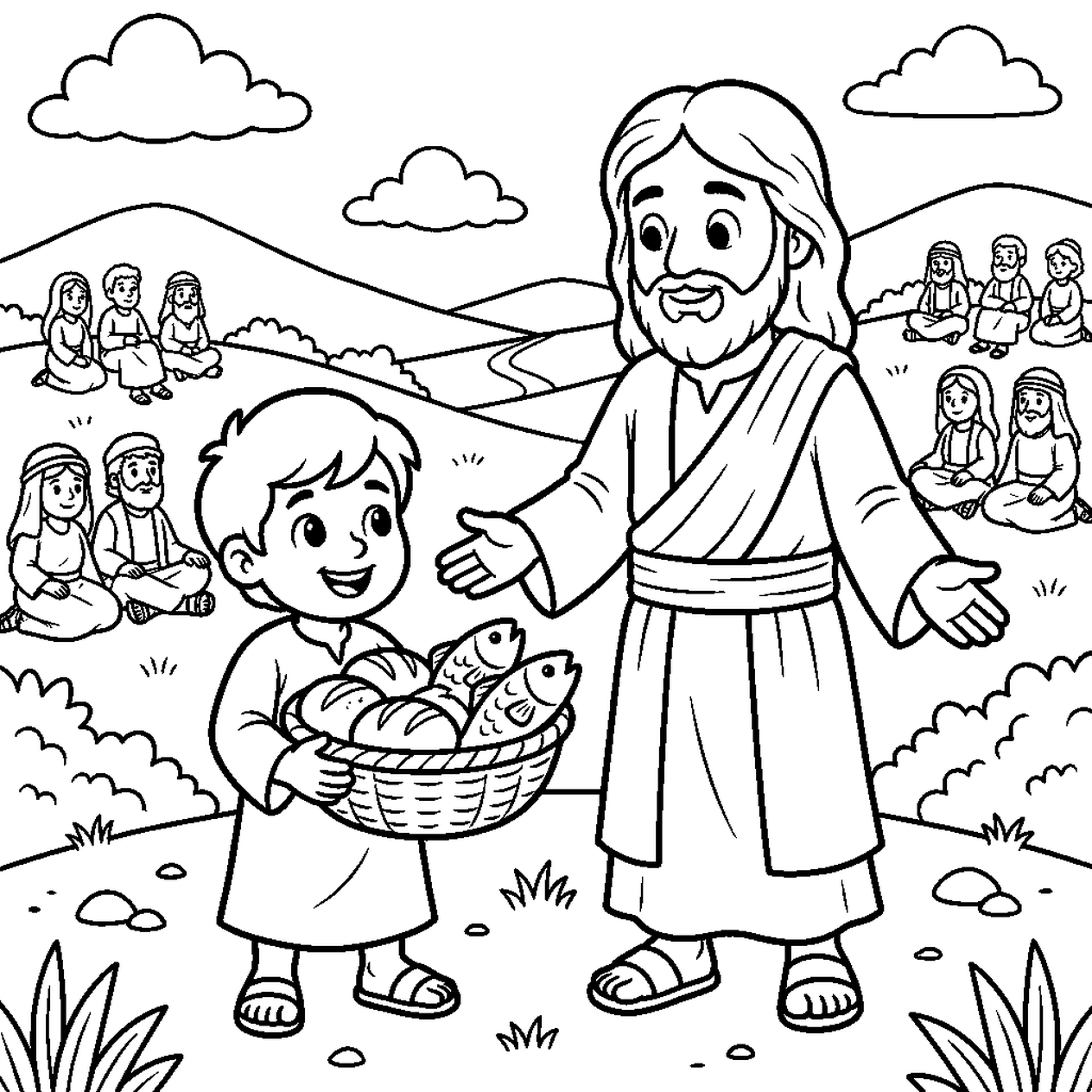

This story is one of twelve lessons in our Starter Pack.
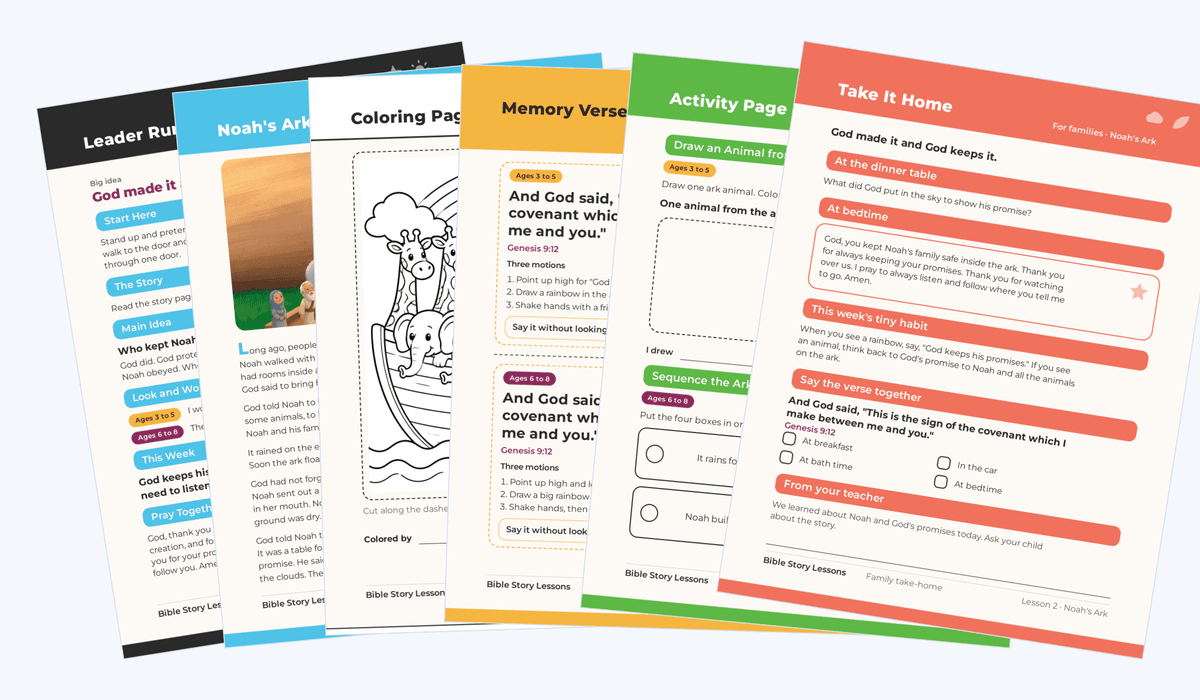
Our Bible Story Lessons Starter Pack has twelve printable lessons for home or church. Try the Noah’s Ark lesson free: seven printable pages, sent to your inbox. See the Starter Pack →
The kind of things parents wonder.
What is the main lesson of Jesus Feeding the 5000 for kids?
The main lesson is that God can take small, ordinary gifts and do something extraordinary with them. A child's small lunch was enough for Jesus to feed thousands. Nothing we offer to God is ever too small.
Who offered the food to Jesus?
A young boy in the crowd offered his lunch of five barley loaves and two small fish. Jesus took this small gift and multiplied it to feed over five thousand people.
What age is this story good for?
The story of Jesus feeding the 5000 works well for ages 3 and up. Young children love the miracle element and the fact that a child plays a key role, while older children can discuss generosity, faith, and trusting God with what we have.
How many people did Jesus actually feed?
More than five thousand. Matthew 14:21 counts 'about five thousand men, besides women and children,' so once families are included the real crowd was likely far larger, possibly ten thousand people or more, all fed from one small lunch.
Is the feeding of the 5,000 in all four Gospels?
Yes. It is the only miracle of Jesus, apart from the resurrection, recorded in all four Gospels: Matthew 14, Mark 6, Luke 9, and John 6. John's account is the one that tells us about the boy and his five barley loaves and two fish.
Why did Jesus have the disciples gather the leftovers?
In John 6:12 Jesus tells them to gather the broken pieces 'that nothing be lost.' The twelve full baskets showed everyone that the miracle was real and abundant, and that even after extraordinary generosity, God wastes nothing.
Conversation starters.
Questions to ask after you read together. No right answers, just good conversation.
The boy gave his whole lunch even though it wasn't much. Would you have given yours?
How do you think the disciples felt when Jesus said 'you give them something to eat'?
There were 12 baskets left over after feeding 5,000 people. What does that kind of abundance tell you about God?
Small gifts matter to God. What's something small you have that you could offer this week?
Teaching this story.
- 01Put the boy at the center of your telling and pause right at the handover: 'Would you have given your whole lunch away?' That one question does more work than any explanation of the miracle.
- 02Children often ask how the food multiplied. It is honest to say the Bible doesn't show us the how. One small lunch went out, everyone ate until they were full, and twelve baskets came back. The mystery is part of the story.
- 03Make the numbers physical. Set five crackers and two fish-shaped snacks on a plate, then look at a photo of a full stadium together. Young kids can't picture five thousand people, but they can see instantly how tiny the lunch is.
- 04For ages 3–5, keep it to the boy, the lunch, and 'everyone had enough.' Ages 6–8 can chew on the curious detail that Jesus had the leftovers gathered up 'that nothing be lost.' Even the crumbs mattered to Him.
Bake-and-Share Barley Rolls

Bake five small rolls together (any simple bread dough works) and count out two fish-shaped crackers beside them: one boy's whole lunch, right there on your kitchen table. Then do what the boy did and give some away to a neighbor or friend, talking about how the small gift was where the miracle started.
Twelve Little Baskets

Cut an egg carton into twelve little cups and have your child tear brown paper into 'bread pieces' until every basket is full. Counting all the way to twelve makes the ending stick: after thousands of people ate, there was more left over than the boy started with.
Keep exploring.
Bible Stories in Chronological Order for Kids
See where this story fits in the full Genesis-to-Revelation reading plan: 27 stories in order with summaries, ages, and a free printable.
Browse →Preschool Bible Stories
Browse more simple Bible stories that work especially well for young children.
Browse →Kindergarten Bible Stories
Find more Bible stories perfect for ages 5 to 6.
Browse →More stories: Ten Lepers · The Resurrection
Story 18 of 27 in the reading plan
These Bible story retellings are based directly on Scripture and written for children ages 3–8. Each page includes its Scripture reference so families can read the original passage together. Written and edited by Hannah Whitford. Quotations are verbatim from the World English Bible; each retelling is checked against the passage.