The Easter Story for Kids.
The Easter story is the most important story in the Bible. Jesus gave His life out of love, and then rose from the dead three days later. That changes everything.
Retold by Hannah Whitford · Matthew 27–28 · Luke 24 · Updated September 2026
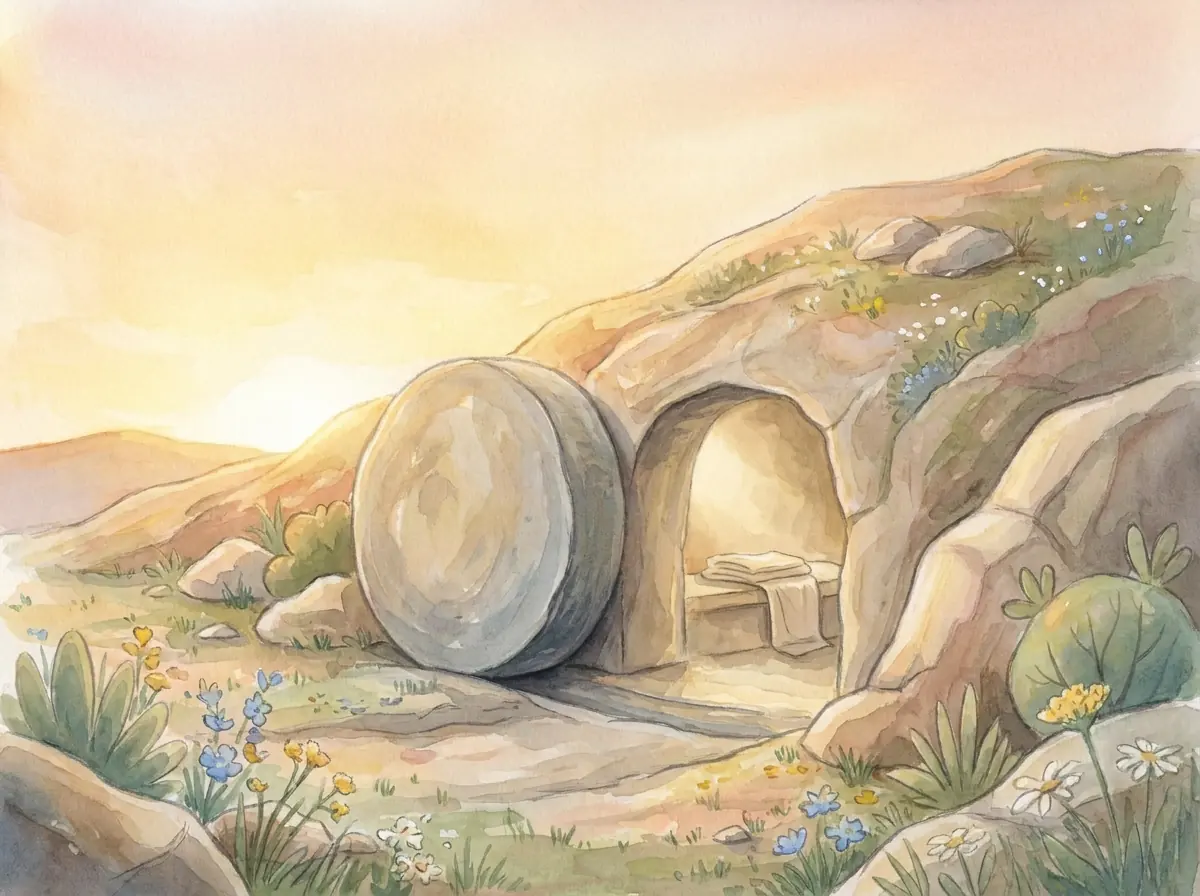
The Story of Easter


“Behold, there was a great earthquake, for an angel of the Lord descended from the sky, and came and rolled away the stone from the door, and sat on it.”
Matthew 28:2
“…Why do you seek the living among the dead?”
Luke 24:5
“They departed quickly from the tomb with fear and great joy, and ran to bring his disciples word.”
Matthew 28:8
Quotations from the World English Bible (public domain). Read the full passage together in your own family Bible. The reference is Matthew 27–28 · Luke 24.
“He is not here, for he has risen, just like he said…”
Matthew 28:6
The angel’s words are the good news of Easter in one line. Let your child be the one who announces it at breakfast.
World English Bible.
The Easter story teaches children that Jesus loves them so completely that He gave His life to forgive our wrongs, and then rose again to show that love wins over everything, even death. The empty tomb means that hope always has the last word.
- 01The empty tomb is a powerful, vivid image that children remember.
- 02The surprise of Easter morning, that Jesus is alive, gives the story real joy.
- 03Jesus appearing to His friends and calling them by name is deeply tender.
- 04Easter gives children a hopeful answer to hard questions about death and love.
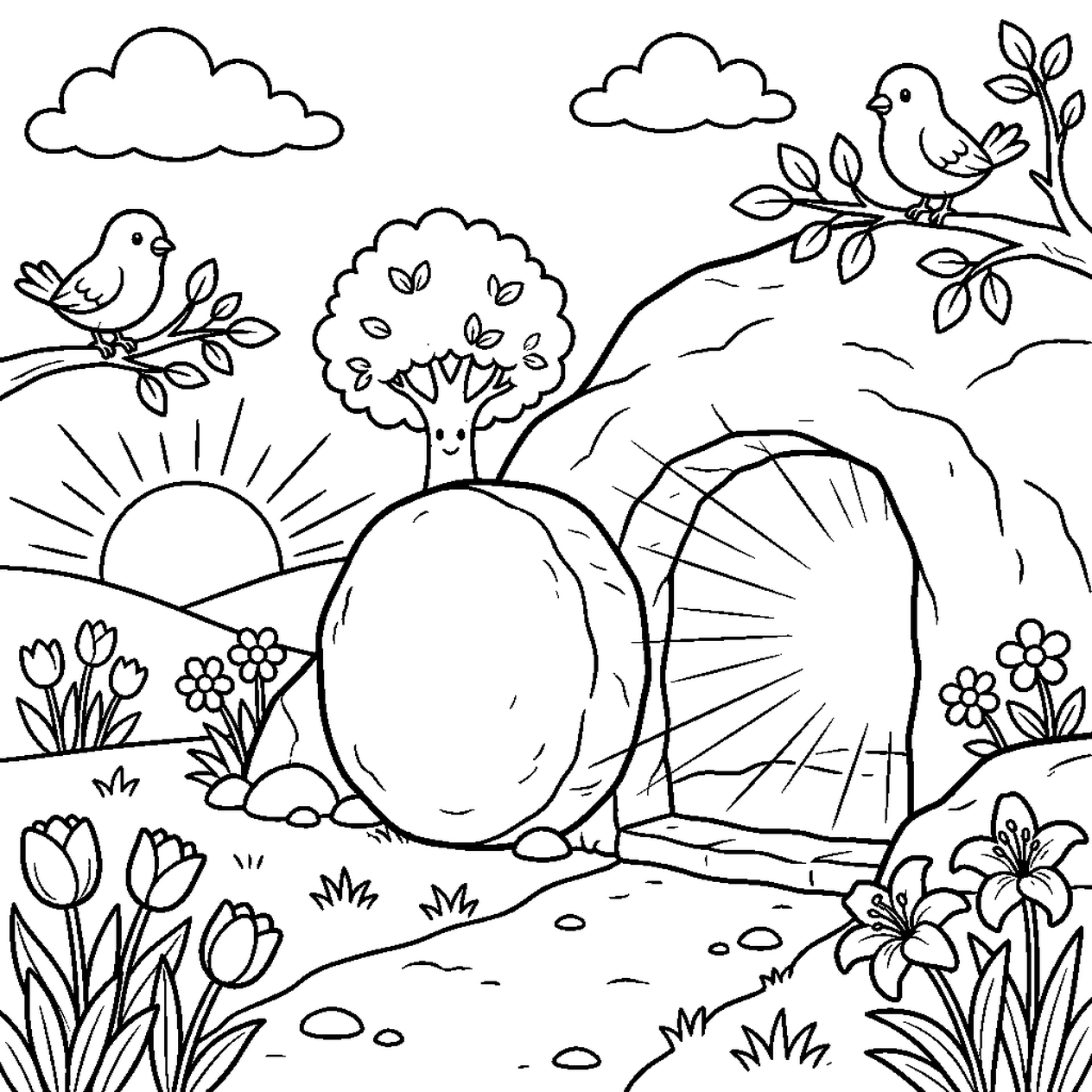

Teach Bible stories at home or in the classroom.
Our Bible Story Lessons Starter Pack has twelve printable lessons for home or church. Try the Noah’s Ark lesson free: seven printable pages, sent to your inbox. See the Starter Pack →

The kind of things parents wonder.
How do I explain the Easter story to young children?
Start with the love: Jesus loved people so much He gave His life. Then share the hope: three days later He rose from the dead. Young children do not need every detail. They need to feel the sadness of Good Friday and the joy of Easter morning. The empty tomb is the key image to hold onto.
What is the main lesson of Easter for kids?
The main lesson is that Jesus loves us so much He died to take the punishment for the wrong things we do, and then rose again three days later. Easter tells children that God's love wins over everything, even death. It is the most hopeful story ever told.
What age is the Easter story good for?
The Easter story can be shared with children of all ages, including young toddlers. With little ones, keep the focus on Jesus being alive and the joy of the empty tomb. Older children can engage with the deeper meaning of sacrifice, forgiveness, and resurrection.
Why was there a guard at Jesus' tomb?
Matthew 27:62-66 explains that the chief priests and Pharisees remembered Jesus had said He would rise after three days, so they asked Pilate to make the tomb secure. The stone was sealed and a guard was posted. It is a detail worth knowing: the tomb was not left unattended, which makes the empty tomb on Sunday morning even more remarkable.
Who saw Jesus first after the resurrection?
The women who came to the tomb early on Sunday: Mary Magdalene and 'the other Mary' in Matthew 28. They found the stone rolled away, heard the angel's announcement, and were the first to meet the risen Jesus and the first sent to tell the others. Children often love noticing that the biggest news in history was given first to the faithful few who showed up early.
How long was Jesus in the tomb?
From Friday evening until before dawn on Sunday. The Bible calls this 'three days' because Jewish counting included any part of a day: Friday, Saturday, and Sunday each count. If your child asks why the math seems short, that is the simple answer: three days by the way days were counted then.
Conversation starters.
Questions to ask after you read together. No right answers, just good conversation.
How do you think the disciples felt on Saturday, the day in between? When they didn't know yet?
Mary didn't recognize Jesus at first. When did she know it was him, and why do you think that matters?
The disciples were hiding behind locked doors. What changed everything for them?
Easter means death didn't win. What difference does that make to how you want to live?
Teaching this story.
- 01With ages 3–5, keep Good Friday to one honest, simple sentence, such as 'Jesus died on the cross, and His friends were very sad,' and don't linger on how it happened. But don't skip it entirely either: without the sad day, Sunday morning has nothing to turn around.
- 02Give Saturday its moment. Pause between the tomb and the sunrise and ask what it felt like to wait, not knowing. Children know waiting better than almost anyone, and it makes the joy of Sunday land harder.
- 03Let your child be the angel. Once they know the line, 'He is not here, for he has risen' is theirs to announce: at the page turn, at breakfast on Easter morning, wherever. Being the one who gets to tell the good news is half the delight of this story.
- 04Expect big questions. 'Will you die? Will I?' often surface around Easter. Answer simply and honestly rather than deflecting. This is the story that exists to hold exactly those questions, and 'Jesus is stronger than death' is a true comfort you can offer without pretending death isn't real.
Empty-Tomb Garden

In a pie tin or shallow dish, build a little hillside from soil, lay a small flower pot on its side for the tomb, and set a stone in front of the opening. Add moss, grass seed, or a few picked flowers. On Easter morning, let your child roll the stone away themselves: an empty tomb they can actually look into makes the heart of the story concrete.
Sunrise Window

Tear yellow, orange, and pink tissue paper (or any thin colored paper) into strips and glue them across a paper plate with the middle cut out, or straight onto wax paper, to make an Easter-morning sunrise. Tape it in a window where the light shines through: a small daily reminder that the sad day was not the end of the story.
Keep exploring.
Bible Stories in Chronological Order for Kids
See where this story fits in the full Genesis-to-Revelation reading plan: 27 stories in order with summaries, ages, and a free printable.
Browse →Easter Bible Stories
Explore the full Easter season: from Palm Sunday through the Resurrection.
Browse →Palm Sunday
Read the story that began Holy Week: Jesus' humble entry into Jerusalem.
Browse →More stories: The Birth of Jesus · Jesus Feeds 5,000
Story 27 of 27 in the reading plan
These Bible story retellings are based directly on Scripture and written for children ages 3–8. Each page includes its Scripture reference so families can read the original passage together. Written and edited by Hannah Whitford. Quotations are verbatim from the World English Bible; each retelling is checked against the passage.