The Birth of Jesus Bible Story for Kids.
The Birth of Jesus is the story at the heart of Christmas. God sent His Son into the world not as a king in a palace, but as a baby in a stable, and the whole world was changed.
Retold by Hannah Whitford · Luke 2 · Matthew 1–2 · Updated September 2026
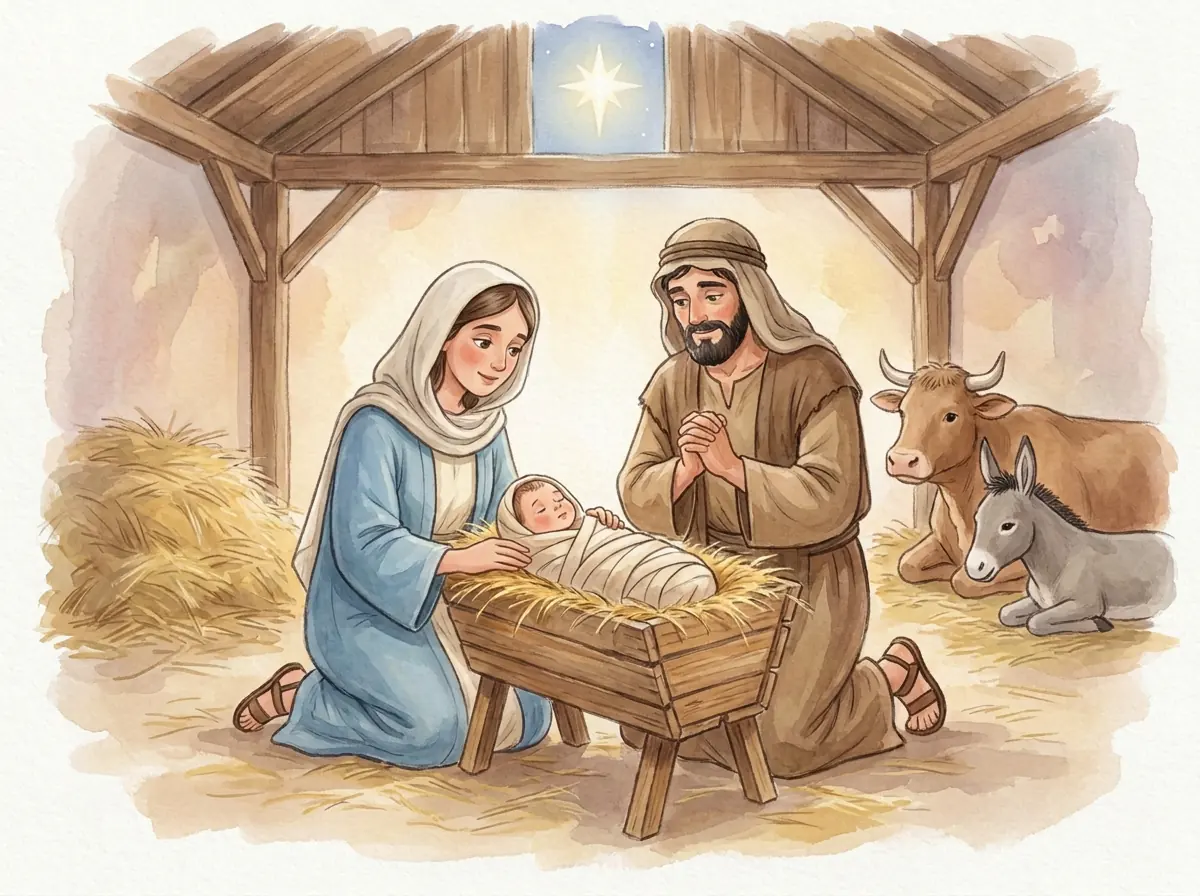
The Story of the Birth of Jesus


“She gave birth to her firstborn son. She wrapped him in bands of cloth, and laid him in a feeding trough, because there was no room for them in the inn.”
Luke 2:7
“Glory to God in the highest, on earth peace, good will toward men.”
Luke 2:14
“They came into the house and saw the young child with Mary, his mother, and they fell down and worshiped him. Opening their treasures, they offered to him gifts: gold, frankincense, and myrrh.”
Matthew 2:11
Quotations from the World English Bible (public domain). Read the full passage together in your own family Bible. The reference is Luke 2 · Matthew 1–2.
“For there is born to you today, in David’s city, a Savior, who is Christ the Lord.”
Luke 2:11
The angel said this to shepherds in the fields at night. Whisper it by the Christmas tree, or at bedtime any time of year.
World English Bible.
The Birth of Jesus teaches children that God's greatest gifts often come in the most unexpected ways. Jesus was born not in a palace but in a stable, because God came close to ordinary people, not just the important ones.
- 01The stable with animals makes the scene easy and warm to picture.
- 02Angels lighting up the night sky is a moment full of wonder.
- 03Shepherds running to see the baby brings joyful excitement to the story.
- 04Children love the star and the long journey of the wise men.
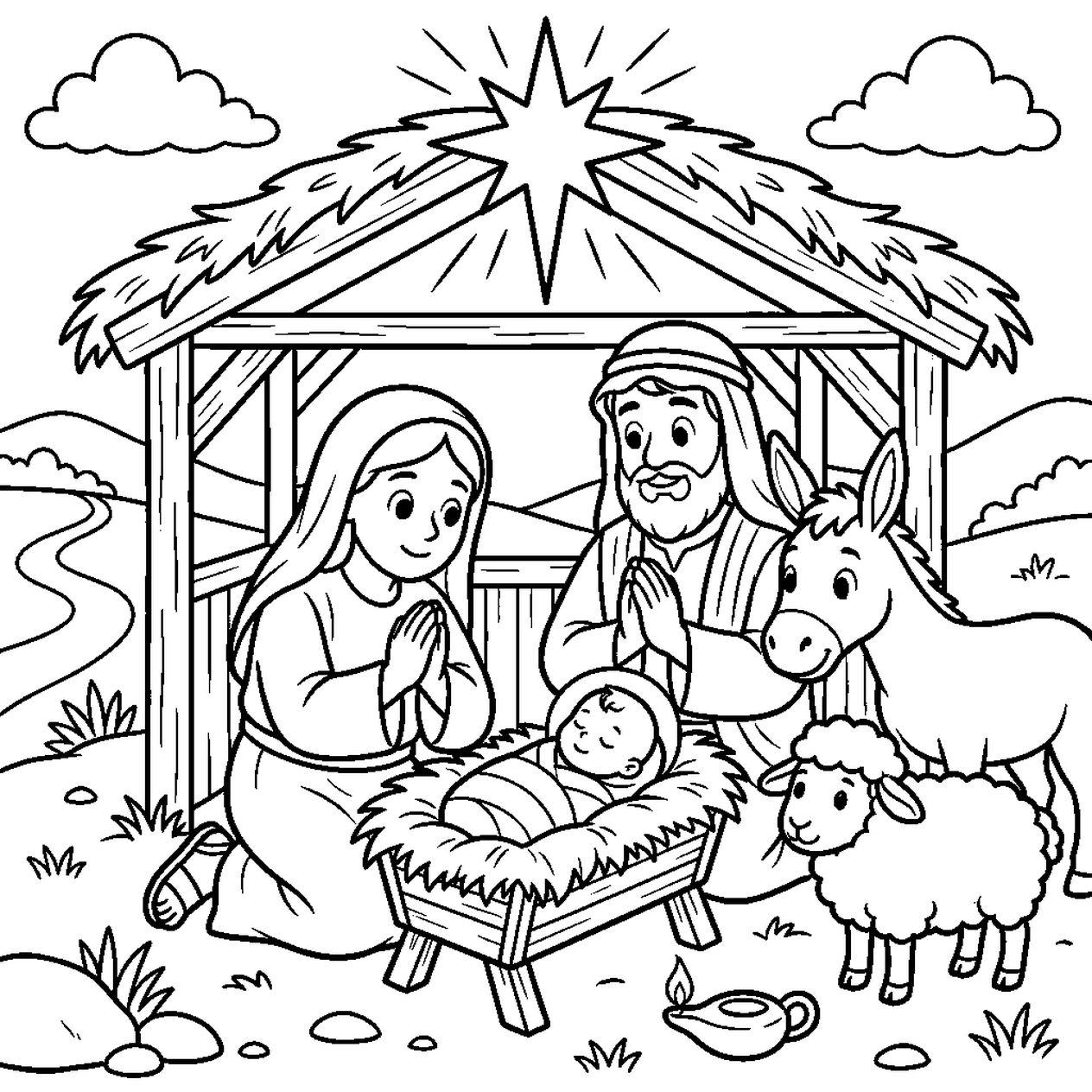

This story is one of twelve lessons in our Starter Pack.
Our Bible Story Lessons Starter Pack has twelve printable lessons for home or church. Try the Noah’s Ark lesson free: seven printable pages, sent to your inbox. See the Starter Pack →

The kind of things parents wonder.
What is the main lesson of the Birth of Jesus for kids?
The main lesson is that God loves the world so much that He sent His Son, not as a powerful king, but as a humble baby. Jesus came for everyone, and His birth is a gift meant for all people.
Why was Jesus born in a stable?
The Bible says there was no room for them at the inn, so Mary laid Jesus in a manger, an animal's feeding trough. The Bible doesn't name the exact place as a stable, but a manger points to a simple animal shelter or cave. The humble setting is part of the story's meaning: God's greatest gift came in the most ordinary, unexpected place.
What age is the Christmas story good for?
The Birth of Jesus is perfect for all ages, including very young toddlers. The angels, animals, star and shepherds make it vivid and memorable for little ones, while older children can explore the deeper meaning of why Jesus came.
What do the three gifts from the wise men mean?
The wise men brought gold, frankincense, and myrrh. Gold was a gift fit for a king. Frankincense was a sweet-smelling incense used in worship, pointing to Jesus being holy. Myrrh was a precious spice, which many see as a quiet hint about Jesus' life and purpose. For children, the simplest meaning is that the wise men gave their very best to honor Jesus.
Why did Mary and Joseph go to Bethlehem?
A ruler had ordered a census (a counting of all the people) and everyone had to travel to their family's hometown to be registered. Joseph's family was from Bethlehem, so he and Mary made the long journey there, which is where Jesus was born.
Did the shepherds and wise men visit Jesus at the same time?
No. The shepherds came the very night Jesus was born, after the angels told them the news. The wise men arrived later (possibly many months afterward) following the star from far away. Many nativity scenes show them together, but the Bible tells them as two separate visits.
When was Jesus born?
Most historians believe Jesus was born a few years earlier than our calendars suggest, somewhere around 6 to 4 BC, during the time when Herod was king. The Bible does not give an exact date or year for His birth, and it does not tell us the month or the season either. What the Bible cares about is not the date but the wonder: that God's Son came into the world as a real baby, in a real town called Bethlehem, at a real moment in history.
Was Jesus really born on December 25th?
Probably not, and the Bible never names the day. December 25th became the day Christians chose to celebrate Jesus' birth many centuries later, but it is a day for remembering, not the actual date He was born. The exact day was never written down. For children, the simplest and truest thing to say is that we do not know the day Jesus was born, so we picked a special day to celebrate Him together.
What year was Jesus born?
No one knows the exact year, and even our AD and BC calendar, which was meant to count from Jesus' birth, was set up centuries afterward and was slightly off. Most scholars now think Jesus was likely born around 6 to 4 BC, because the Bible says He was born while Herod was still king. The Bible focuses on why Jesus came rather than exactly when, but He was a real person born at a real time in history.
Conversation starters.
Questions to ask after you read together. No right answers, just good conversation.
Why do you think God chose a manger (a barn) instead of a palace for Jesus to be born in?
The shepherds dropped everything and went to find the baby. What do you think they felt when they saw him?
Mary kept all these things in her heart. What's something amazing you'd want to remember forever?
If you had been one of the wise men, what would you have brought as a gift?
Teaching this story.
- 01Tell this one slowly and let the quiet do the work. The story doesn't need extra drama. Try dimming the lights for the angel scene and dropping your voice almost to a whisper at the manger; children lean in every time.
- 02'Why wasn't there room for them?' is the question you're most likely to get. Bethlehem was packed because everyone had traveled for the counting. And the answer opens the door to the story's whole point: God's Son arrived with no special treatment at all.
- 03If your nativity set shows shepherds and wise men together, don't bother correcting the set. Use it. 'The shepherds came that very night; the wise men had a much longer trip.' The two-visits detail makes older kids feel like insiders.
- 04For toddlers, stay with the concrete things they can point to: baby, star, sheep, hay. Ages 6–8 are ready for the why: the names Jesus ('God saves') and Immanuel ('God with us') tell you what the whole story means.
Craft-Stick Manger

Glue craft sticks into a small criss-cross manger and fill it with shredded paper or real straw. Wrap a clothespin or peg-doll 'baby' snugly in a strip of soft cloth, the same way Mary wrapped Jesus in bands of cloth, and let your child lay him gently in the hay.
Shepherds' Night Sky
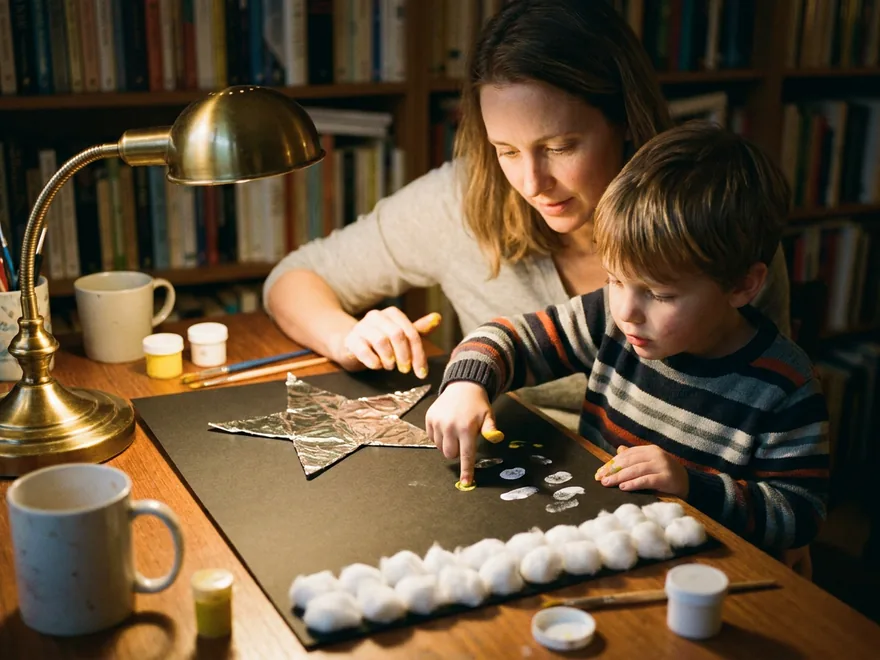
On black paper, let your child press white and yellow fingerprints for the crowd of angels filling the sky, with one big foil star shining above. Younger children can add cotton-ball sheep along the bottom while you retell the moment the shepherds looked up.
Keep exploring.
Bible Stories in Chronological Order for Kids
See where this story fits in the full Genesis-to-Revelation reading plan: 27 stories in order with summaries, ages, and a free printable.
Browse →Christmas Bible Stories
Explore more Christmas stories and Nativity retellings for children.
Browse →Bedtime Bible Stories
Find more quiet, wonder-filled Bible stories perfect for the end of the day.
Browse →More stories: The Resurrection · Palm Sunday
Story 17 of 27 in the reading plan
These Bible story retellings are based directly on Scripture and written for children ages 3–8. Each page includes its Scripture reference so families can read the original passage together. Written and edited by Hannah Whitford. Quotations are verbatim from the World English Bible; each retelling is checked against the passage.