Palm Sunday Bible Story for Kids.
On the first Palm Sunday, Jesus rode into Jerusalem on a donkey as crowds of people carried palm branches and rejoiced. It was the beginning of the most important week in the Bible.
Retold by Hannah Whitford · Matthew 21 · Luke 19 · Updated September 2026
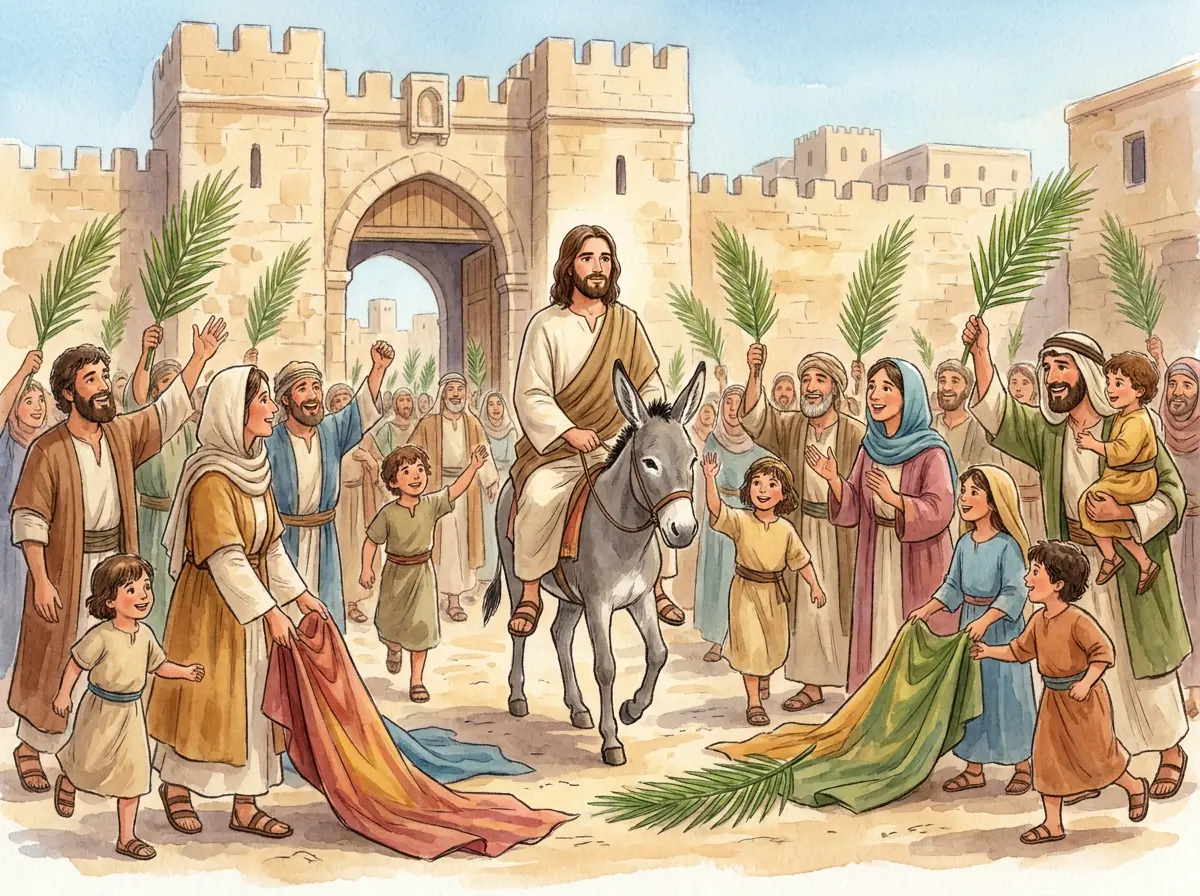
The Story of Palm Sunday


“Tell the daughter of Zion, behold, your King comes to you, humble, and riding on a donkey, on a colt, the foal of a donkey.”
Matthew 21:5
“A very great multitude spread their clothes on the road. Others cut branches from the trees, and spread them on the road.”
Matthew 21:8
“When he came near, he saw the city and wept over it…”
Luke 19:41
Quotations from the World English Bible (public domain). Read the full passage together in your own family Bible. The reference is Matthew 21 · Luke 19.
“Blessed is the King who comes in the name of the Lord!”
Luke 19:38
Jesus’ followers shouted this as He rode toward Jerusalem on a young donkey. Hold up your arms like palm branches while you learn it.
World English Bible.
Palm Sunday teaches children that Jesus is a humble King. He came riding on a donkey, with humility and love. He rode into Jerusalem knowing what it would cost Him, because He loved people that much.
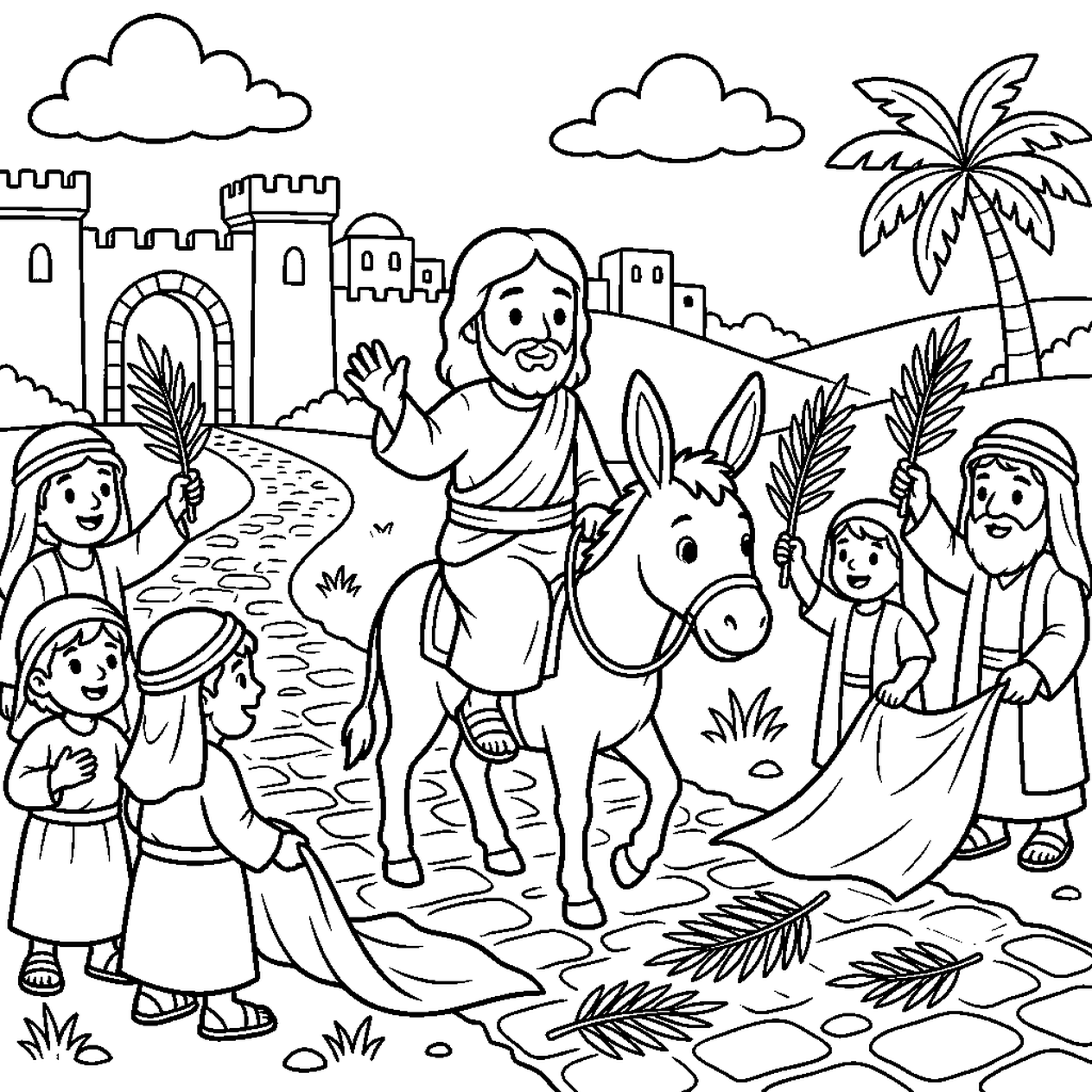
- 01Carrying palm branches is a joyful, active image children love to act out.
- 02The parade-like atmosphere makes the story feel festive and exciting.
- 03The humble donkey is an endearing and memorable detail.
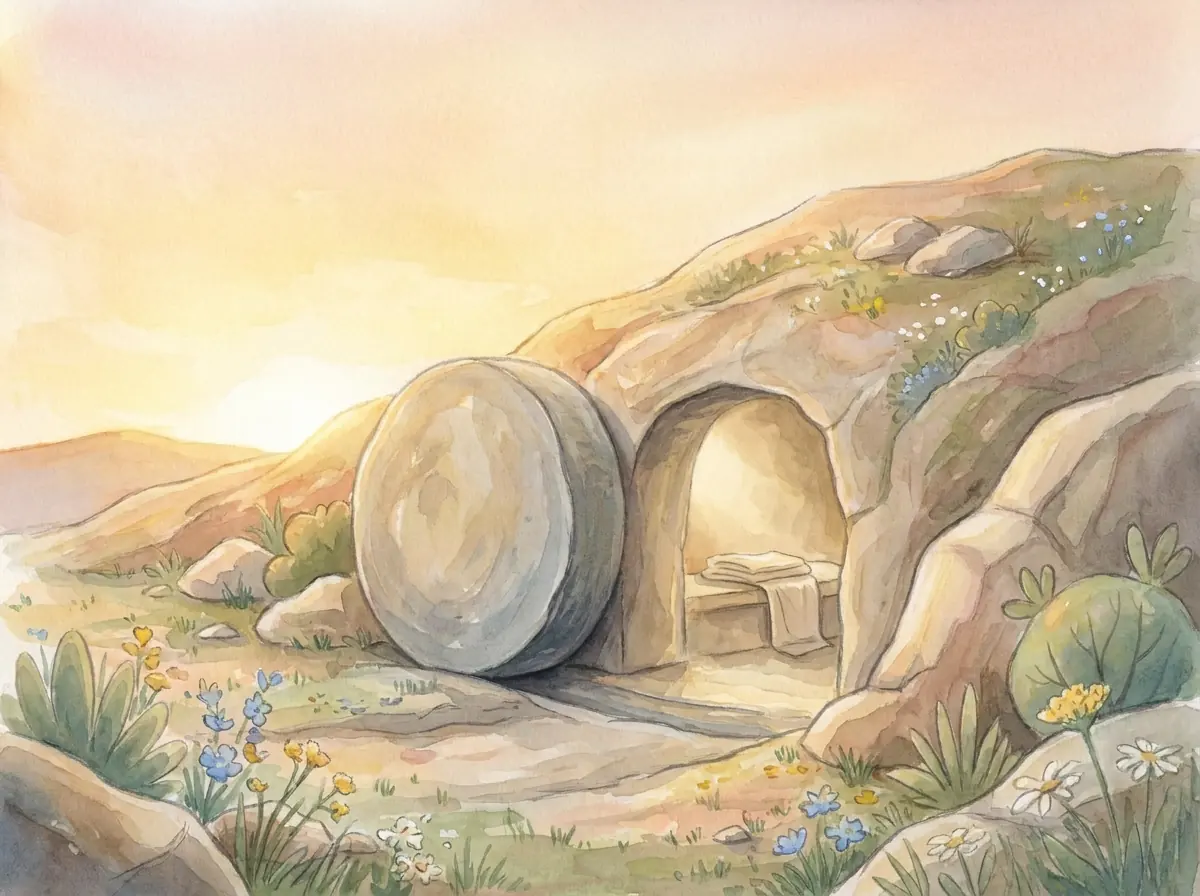
- 04Palm Sunday connects naturally to the Easter story that follows.

This story is one of twelve lessons in our Starter Pack.
Our Bible Story Lessons Starter Pack has twelve printable lessons for home or church. Try the Noah’s Ark lesson free: seven printable pages, sent to your inbox. See the Starter Pack →
We’ll also send a few emails over the next couple of weeks with lessons, printables and our books. Unsubscribe anytime.
The kind of things parents wonder.
What is Palm Sunday and why do we celebrate it?
Palm Sunday marks the day Jesus rode into Jerusalem on a donkey, welcomed by crowds carrying palm branches. Christians celebrate it because it is the beginning of Holy Week, the week leading up to Easter and the resurrection of Jesus.
Why did Jesus ride a donkey on Palm Sunday?
Jesus rode a young donkey as a sign of peace and humility. It fulfilled an ancient prophecy that the King would come humble, riding on a donkey, and showed that Jesus came to serve and give His life.
What age is Palm Sunday good for?
Palm Sunday works well for all ages. Young children enjoy the celebration and the image of people carrying branches; older children can explore the meaning of Jesus' humble entry and how it connects to the Easter story.
What does 'Hosanna' mean?
'Hosanna' comes from a Hebrew phrase meaning 'save us, please' (see Psalm 118:25). By Jesus' day it had become a joyful shout of praise and welcome. When the crowds cried 'Hosanna to the son of David!' they were both praising Jesus and greeting Him as the promised rescuer-king.
Why did the people carry palm branches and lay down their cloaks?
Spreading cloaks and branches on the road was how ancient crowds honored a king. It made a royal carpet for his arrival. Matthew 21:8 says people cut branches from the trees; John 12:13 tells us they were palm branches, which is where the day gets its name.
Why did Jesus cry on Palm Sunday?
Luke 19:41 says that as Jesus came near, He saw the city and wept over it, because Jerusalem did not recognize what would truly bring it peace. Even in the middle of the cheering, Jesus loved the city enough to grieve for it. Older children often find this surprising detail a tender place to pause and talk.
Conversation starters.
Questions to ask after you read together. No right answers, just good conversation.
The crowds were cheering 'Hosanna!' What do you think they thought was about to happen?
Jesus chose to ride a young donkey. What does that say about the kind of King He came to be?
If you had been in the crowd, do you think you would have joined in or stood back and watched?
What does it mean to welcome Jesus into your life the way the crowd welcomed Him into Jerusalem?
Teaching this story.
- 01This is the story to be loud with. March around the living room, carry anything branch-shaped, shout 'Hosanna!' Young children learn Palm Sunday with their whole bodies, and the Gospels describe exactly that kind of noisy, joyful crowd.
- 02Explain 'Hosanna' once and simply: it began as a cry meaning 'save us!' and had become a shout of praise and welcome. Then let it just be the happy word of the day.
- 03With ages 3–5, let Palm Sunday stay the happy chapter. There is no need to front-load the sadness coming later in the week. From about 7 up, children can handle the harder question of what the crowd expected, and how quickly cheering can change.
- 04Luke adds a detail worth reading with older children: in the middle of the celebration, Jesus saw the city and wept over it. Kids are often struck that Jesus cried during His own parade. Let them wonder about that out loud.
Handprint Palm Branches
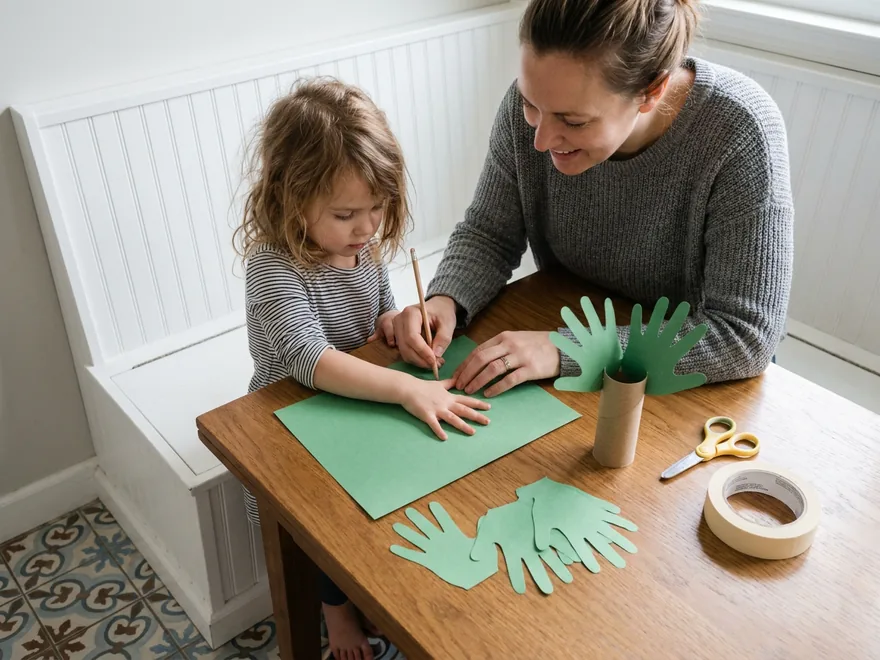
Trace your child's hands on green paper (or white paper colored green), cut them out, and tape several to a paper-towel tube or wooden spoon so the fingers fan out like fronds. It takes ten minutes and makes a branch sturdy enough to carry in a parade.
The Living-Room Parade
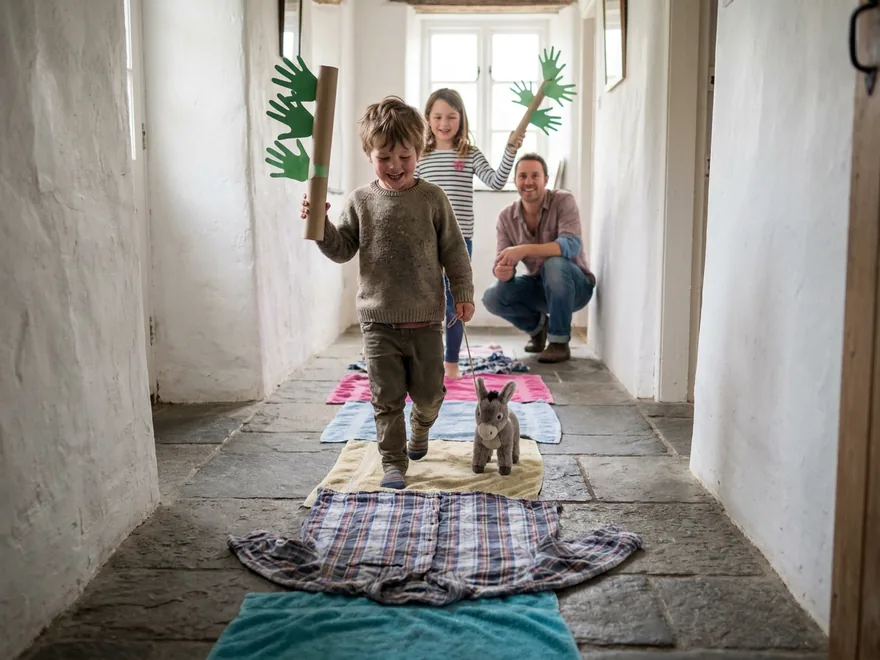
Lay towels or old shirts down the hallway as cloaks on the road, choose a stuffed animal to be the donkey, and let your child lead the procession carrying their handprint branch and shouting 'Hosanna!' Acting out the crowd's welcome is how the story sticks. Most kids will ask to do it again tomorrow.
Keep exploring.
Bible Stories in Chronological Order for Kids
See where this story fits in the full Genesis-to-Revelation reading plan: 27 stories in order with summaries, ages, and a free printable.
Browse →Easter Bible Stories
Explore the full Easter story, from Palm Sunday through the Resurrection.
Browse →Bedtime Bible Stories
Find more New Testament stories perfect for reading together at night.
Browse →More stories: The Birth of Jesus · Jesus Feeds 5,000
Story 26 of 27 in the reading plan
These Bible story retellings are based directly on Scripture and written for children ages 3–8. Each page includes its Scripture reference so families can read the original passage together. Written and edited by Hannah Whitford. Quotations are verbatim from the World English Bible; each retelling is checked against the passage.