Baby Moses Bible Story for Kids.
Baby Moses is a gentle Bible story that helps children see how God protected one small child and quietly prepared him for a bigger purpose.
Retold by Hannah Whitford · Exodus 2:1–10 · Updated September 2026
The Story of Baby Moses


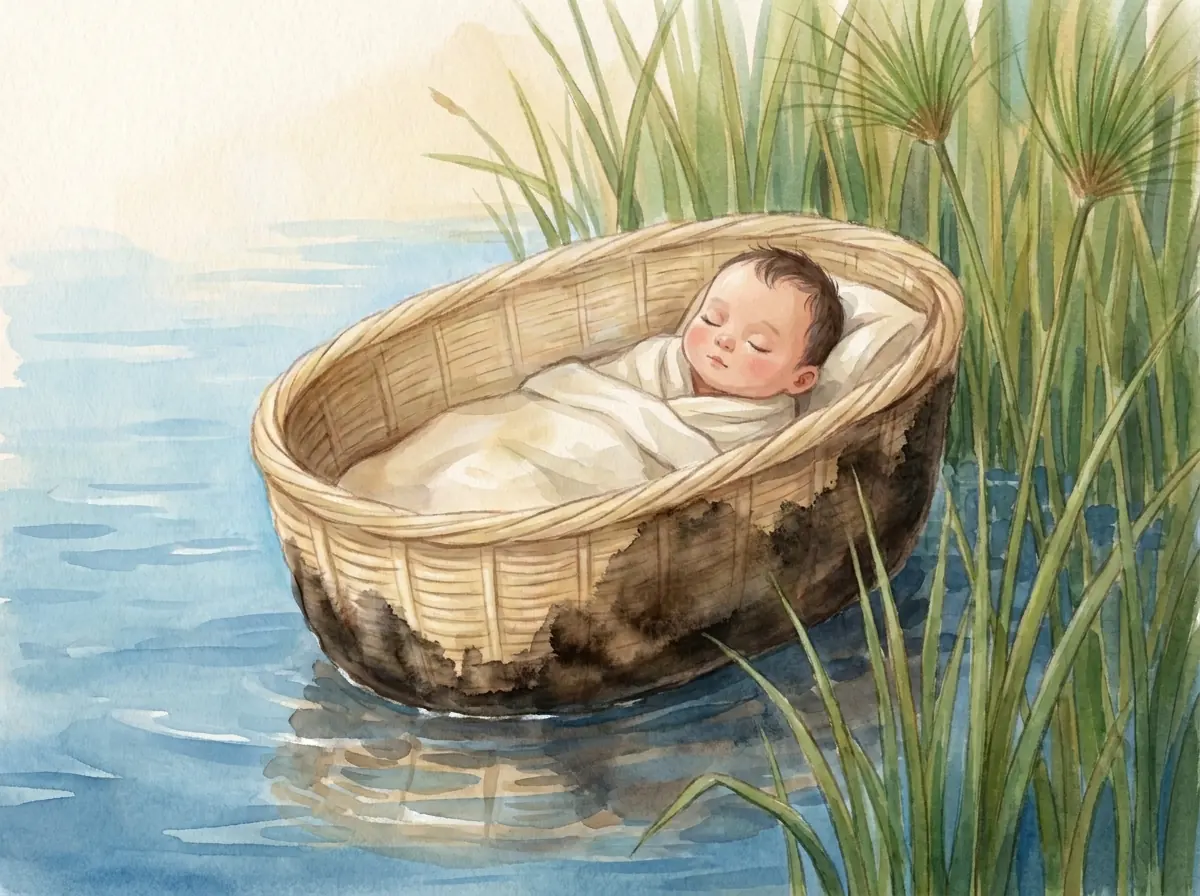
“When she could no longer hide him, she took a papyrus basket for him, and coated it with tar and with pitch. She put the child in it, and laid it in the reeds by the river’s bank.”
Exodus 2:3
“She opened it, and saw the child, and behold, the baby cried. She had compassion on him, and said, ‘This is one of the Hebrews’ children.’”
Exodus 2:6
“Pharaoh’s daughter said to her, ‘Take this child away, and nurse him for me, and I will give you your wages.’ The woman took the child, and nursed it.”
Exodus 2:9
Quotations from the World English Bible (public domain). Read the full passage together in your own family Bible. The reference is Exodus 2:1–10.
“… She named him Moses, and said, ‘Because I drew him out of the water.’”
Exodus 2:10
World English Bible.
Baby Moses shows that our true hope is in God, a lesson we understand more deeply every year we live it.
- 01The basket in the river makes the story easy to picture and remember.
- 02The story feels gentle and safe, even though there is tension at the start.
- 03Young children connect with the idea of a baby being loved and protected.
- 04It opens simple conversations about family courage, trust, and God's care.

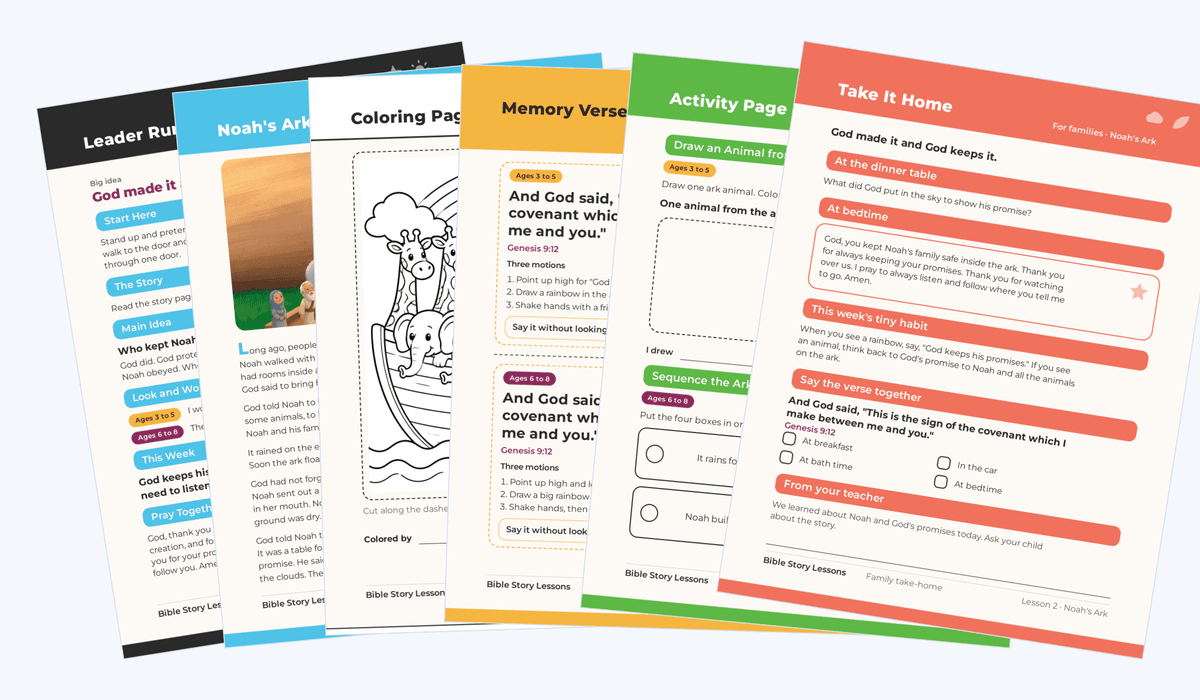
This story is one of twelve lessons in our Starter Pack.
Our Bible Story Lessons Starter Pack has twelve printable lessons for home or church. Try the Noah’s Ark lesson free: seven printable pages, sent to your inbox. See the Starter Pack →
We’ll also send a few emails over the next couple of weeks with lessons, printables and our books. Unsubscribe anytime.
The animated version.
An original, vintage-style illustrated retelling from Childhood Bible Stories, made for young children.
The kind of things parents wonder.
What is the lesson of Baby Moses for kids?
The lesson is that God protects and cares for His people, even when they feel small or vulnerable. Baby Moses shows that God was already at work long before Moses grew up.
Why is Baby Moses a good Bible story for preschoolers?
It is a strong preschool story because it is easy to picture and emotionally clear. Children understand the love of Moses' family and the comfort of God keeping him safe.
Is Baby Moses too scary for toddlers?
Not if it is told gently. Most families focus on the basket, the river reeds, and God's protection. You can mention that Moses' mother got to nurse him when he was tiny, and that God kept him safe as he grew up, without going into the background danger.
Where is the story of Baby Moses in the Bible?
Baby Moses is found in Exodus 2:1–10, right at the start of the book of Exodus. Chapter 1 gives the background (why Hebrew families were in danger in Egypt) and chapter 2 tells of the basket, the river, and Pharaoh's daughter.
Who found baby Moses in the river?
Pharaoh's daughter found him. She had come down to the Nile to bathe when she spotted the basket among the reeds and sent her servant to bring it to her. When she opened it the baby was crying, and the Bible says she had compassion on him, even though she recognized he was one of the Hebrew children.
What does the name Moses mean?
Pharaoh's daughter chose the name herself. Exodus 2:10 says she called him Moses “Because I drew him out of the water.” The name sounds like the Hebrew word for “draw out.” His name retold the story of his rescue every time someone said it.
Conversation starters.
Questions to ask after you read together. No right answers, just good conversation.
What do you think Moses' mother was feeling when she put him in the basket?
Why did she use a basket instead of just keeping him hidden at home?
The princess could have ignored the crying baby. Why do you think she didn't?
God had a big plan for Moses that started with one small basket. How does that make you feel about small beginnings?
Teaching this story.
- 01Pause right after the basket goes into the water and ask, “How do you think his mother felt walking home?” Letting kids sit in that mixed feeling (brave and sad at the same time) is where this story does its best work.
- 02For toddlers and preschoolers, skip Pharaoh's law entirely. The basket, the reeds, the princess, and the happy reunion are a complete story on their own; the background danger can wait until age six or seven.
- 03If a child asks “Why didn't his mommy just keep him?”, answer honestly: she hid him as long as she could, and the basket wasn't giving up. It was the best and bravest way she had left to keep him safe.
- 04Older kids love spotting the twist that Moses' mother was paid wages to nurse her own son. Ask them to hunt for every detail God quietly turned around. It makes a great first lesson in reading the Bible closely.
A woven basket for baby Moses
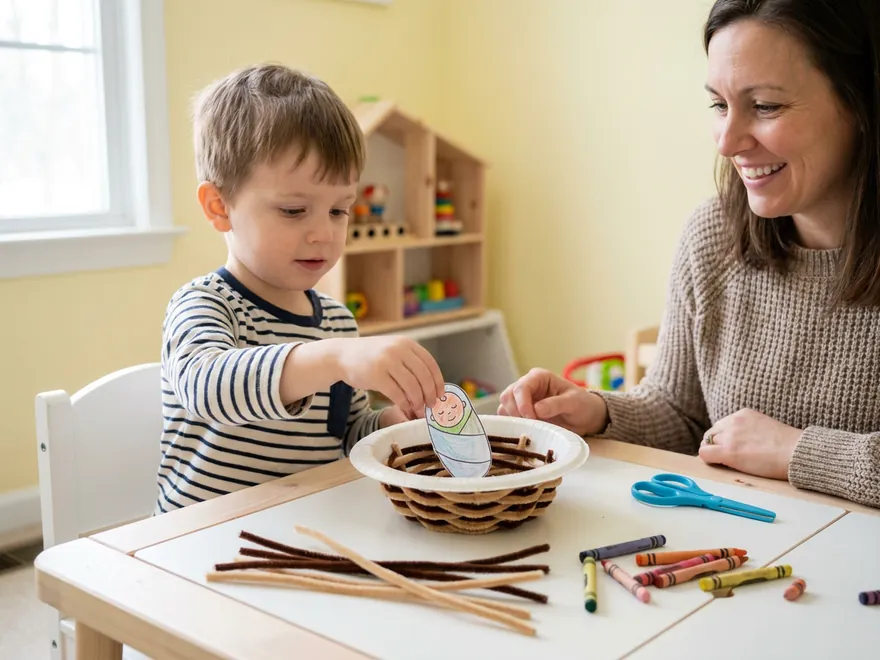
Cut slits across a paper plate, then weave pipe cleaners over and under until you have a little basket.
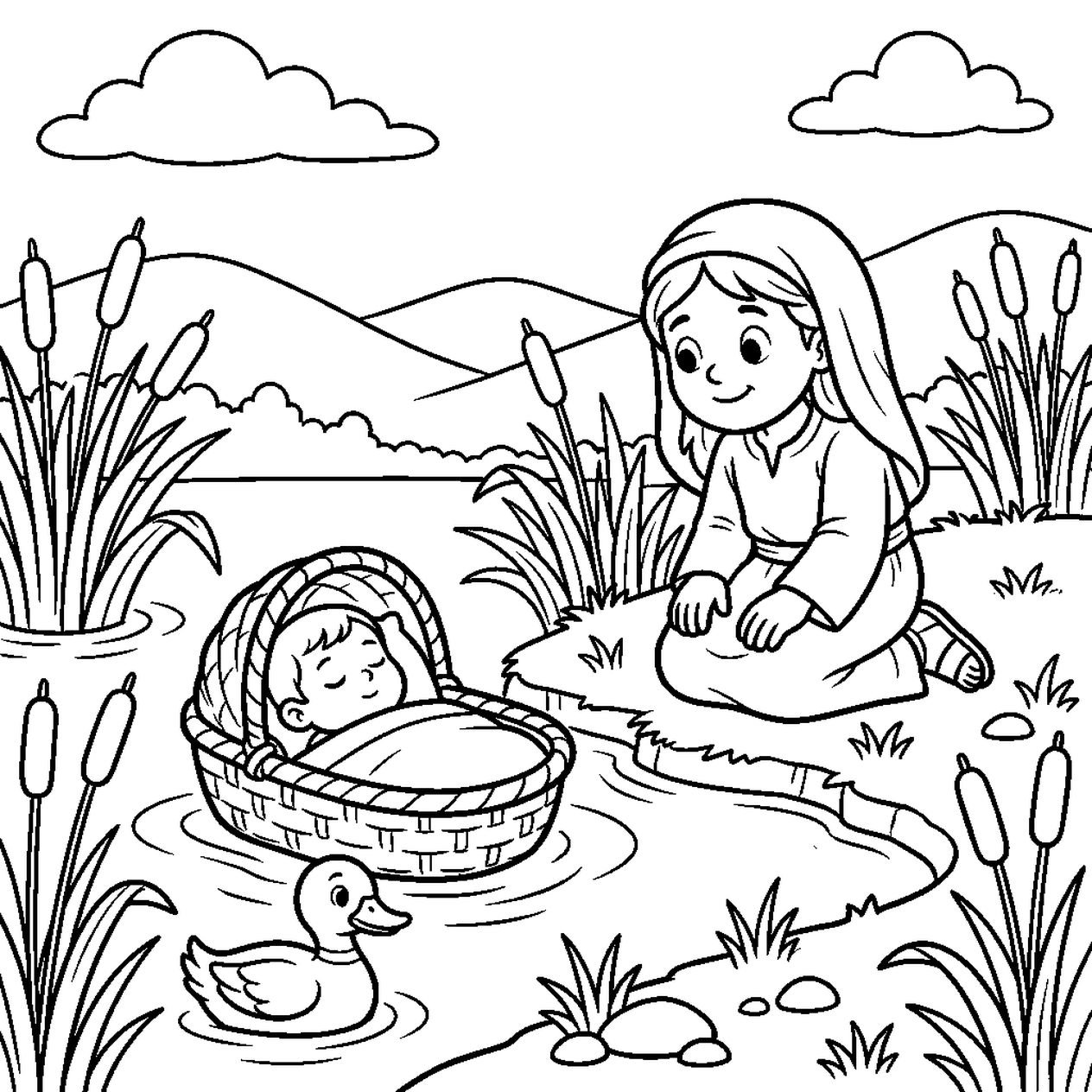
Tuck in a tiny baby Moses cut from our free Baby Moses coloring page, colored in and ready to float safely among the reeds.
Paint the Nile together
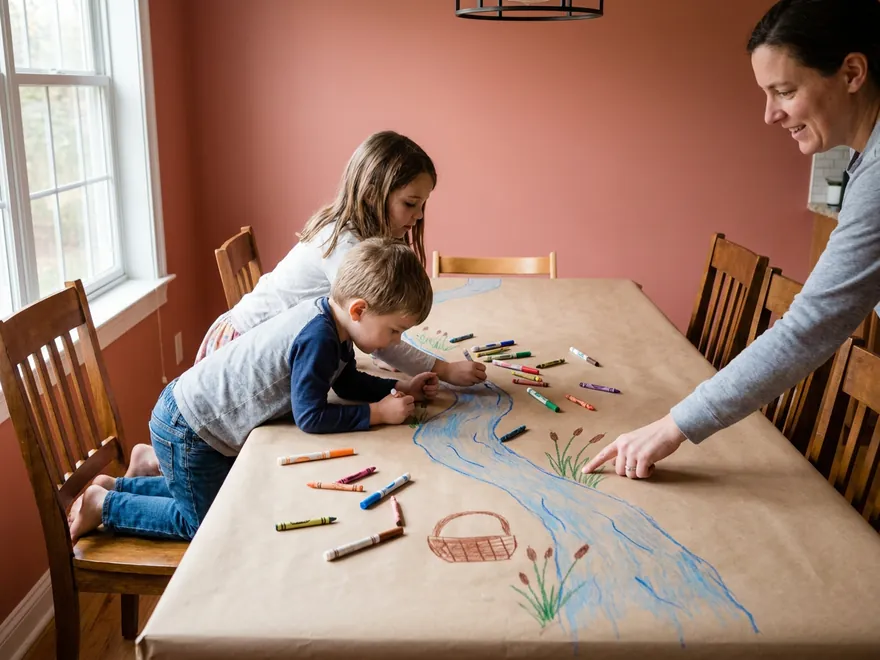
Tape a long sheet of plain brown wrapping paper across the kitchen or classroom table and hand out the crayons and markers. Let your child draw their own Nile: blue water winding down the middle, tall green reeds along the banks, a little basket tucked among them, and Miriam watching from a hiding spot. Ask them where they would hide the basket to keep Moses safe.
Keep exploring.
Bible Stories in Chronological Order for Kids
See where this story fits in the full Genesis-to-Revelation reading plan: 27 stories in order with summaries, ages, and a free printable.
Browse →Bedtime Bible Stories
Find more peaceful Bible stories that help children wind down with comfort and faith.
Browse →Old Testament Bible Stories
Explore more foundational Old Testament stories told in a gentle, child-friendly way.
Browse →More stories: Noah's Ark · Abraham and the Promise · Creation
Story 7 of 27 in the reading plan
These Bible story retellings are based directly on Scripture and written for children ages 3–8. Each page includes its Scripture reference so families can read the original passage together. Written and edited by Hannah Whitford. Quotations are verbatim from the World English Bible; each retelling is checked against the passage.