Adam and Eve Bible Story for Kids.
Adam and Eve is the story of the very first people, the beautiful garden God gave them, the one rule they broke, and the God who kept on loving them anyway. It is where the Bible's big story of rescue begins.
Retold by Hannah Whitford · Genesis 2–3 · Updated September 2026
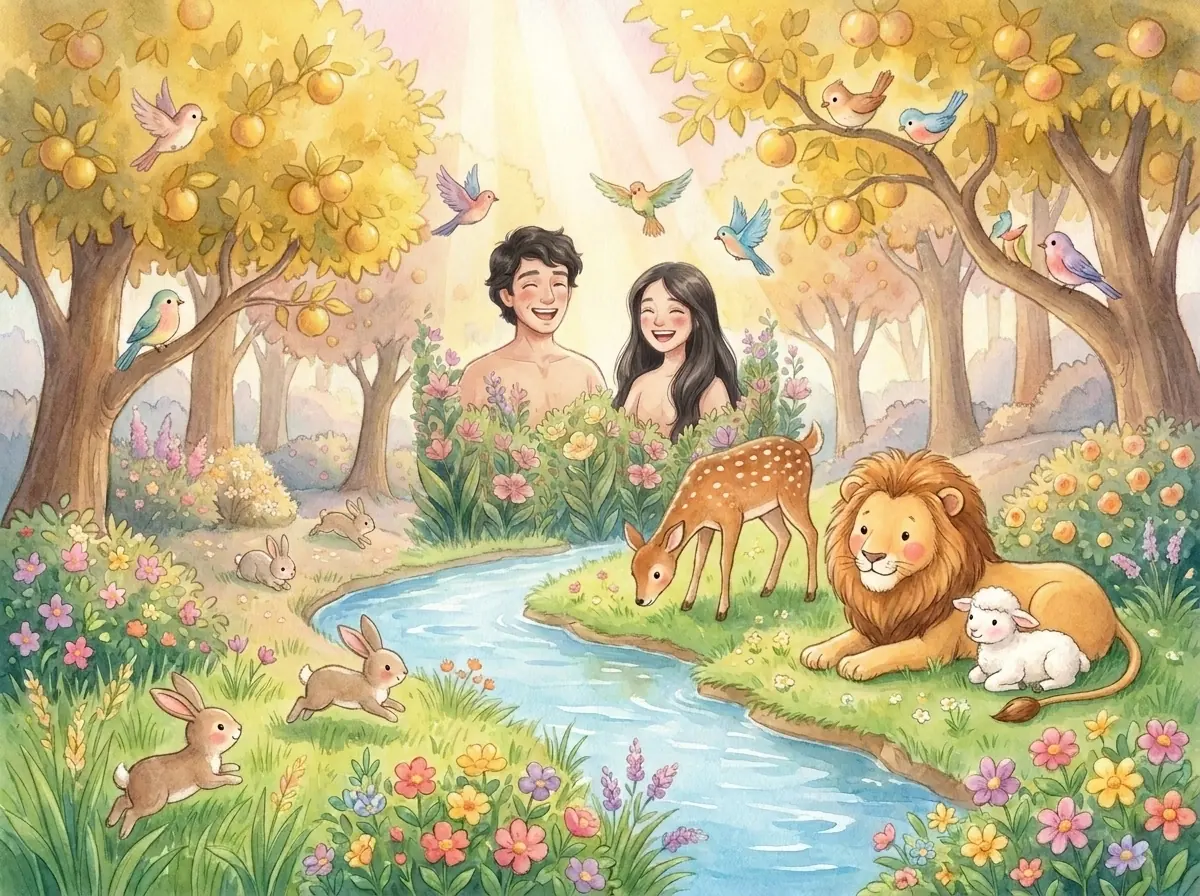
The Story of Adam and Eve


“The LORD God took the man, and put him into the garden of Eden to cultivate and keep it.”
Genesis 2:15
“The LORD God called to the man, and said to him, ‘Where are you?’”
Genesis 3:9
“The LORD God made coats of animal skins for Adam and for his wife, and clothed them.”
Genesis 3:21
Quotations from the World English Bible (public domain). Read the full passage together in your own family Bible. The reference is Genesis 2–3.
“The LORD God called to the man, and said to him, ‘Where are you?’”
Genesis 3:9
Even after Adam and Eve hid, God came looking for them. It is a verse to remember on a day your child has done something wrong.
World English Bible.
Adam and Eve teaches children that our choices are real and matter. Disobeying brought real sadness and real consequences. But the deeper lesson is what God did next: He came looking, He made them clothes, and He promised a rescue. Consequences are real, and so is God's love, and His love gets the last word.
- 01The Garden of Eden is a joy to imagine: a river to splash in, fruit to pick, and animals that were never scary.
- 02Adam naming the animals is one of the most playful scenes in the Bible, and children love inventing names along with him.
- 03Every child knows what it feels like to break a rule and want to hide, so the story feels true to their own life.
- 04The ending surprises them: instead of only being punished, Adam and Eve are given clothes, a promise, and a God who goes with them.


Teach Bible stories at home or in the classroom.
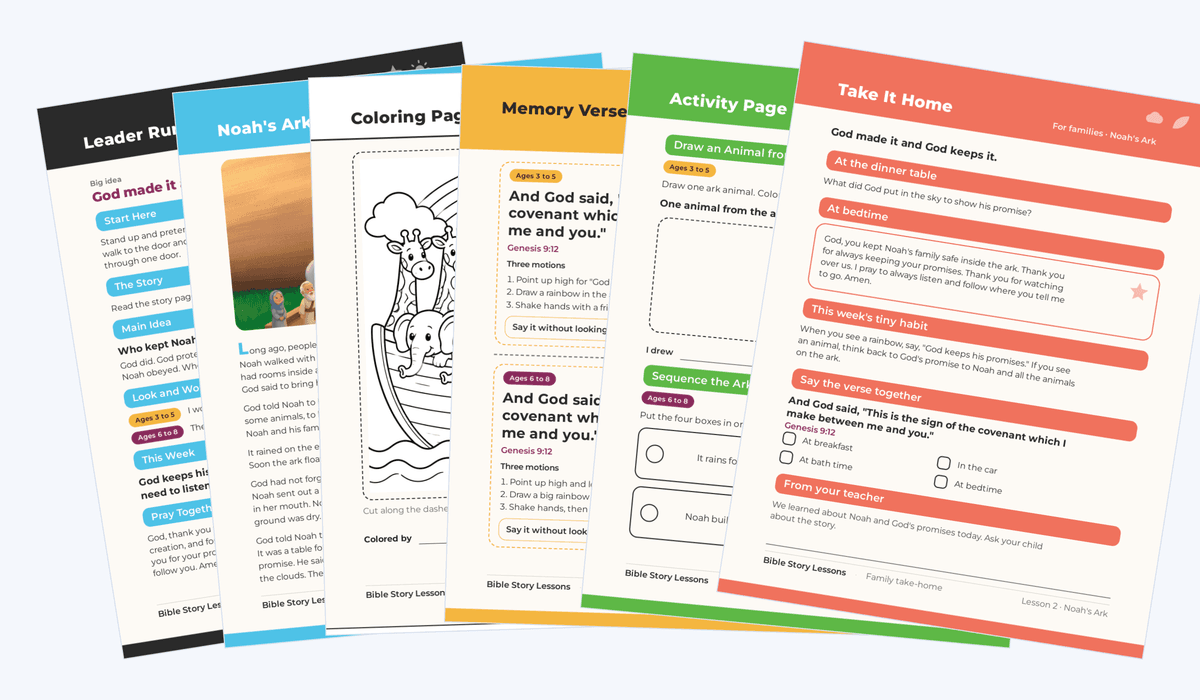
Our Bible Story Lessons Starter Pack has twelve printable lessons for home or church. Try the Noah’s Ark lesson free: seven printable pages, sent to your inbox. See the Starter Pack →
We’ll also send a few emails over the next couple of weeks with lessons, printables and our books. Unsubscribe anytime.
The kind of things parents wonder.
What is the main lesson of Adam and Eve for kids?
The main lesson is that our choices matter and disobedience has real consequences, and that God's love is even bigger than our worst choice. Adam and Eve had to leave the garden, but God came looking for them, made them clothes, and promised a rescue.
What age is the Adam and Eve story good for?
Adam and Eve works for preschoolers through early elementary. Ages 3–5 can follow the simple shape: a beautiful garden, one rule, a wrong choice, and God's continuing love. Ages 6–8 are ready to talk about temptation, honesty, and why the serpent's lie was so sneaky.
Why did God let the snake into the garden?
The Bible doesn't fully answer this question, so it's okay to tell children honestly: we don't know everything about it. What we do know is that God made people able to make real choices, because love that is forced isn't really love, and real choice means the choice could go wrong. The serpent told a lie, and Adam and Eve chose to believe it. But God was not surprised or defeated; He already had a rescue plan, and the rest of the Bible tells it.
Did Adam and Eve stop being loved after they disobeyed?
No. Their choice had real consequences (they had to leave the garden), but God never stopped loving them. Genesis shows it in small, tender details: God came looking for them and called 'Where are you?', He listened to them, He promised that one of Eve's descendants would defeat the serpent one day, and He personally made them clothes before they left. Consequences and love are both in the story, and the love lasts longer.
Was the forbidden fruit an apple?
The Bible never says. Genesis only calls it the fruit of the tree of the knowledge of good and evil, and describes it as beautiful and good to eat. Apples came into the story centuries later through paintings and tradition. What kind of fruit it was matters far less than the choice it stood for.
Why couldn't Adam and Eve go back to the garden?
Genesis says God placed cherubim, angels, at the east of the garden to guard the way to the tree of life. Leaving was a real consequence of their choice, but many teachers also see mercy in it: God did not want people to live forever in a broken, sad condition. Instead, God set a bigger plan in motion to make things right and bring His children home, which is the story the whole rest of the Bible tells.
Conversation starters.
Questions to ask after you read together. No right answers, just good conversation.
Have you ever done something you were told not to do? What happened next, and how did it feel?
Why do you think Adam and Eve hid from God instead of telling Him right away?
God made Adam and Eve warm clothes even after they disobeyed. What does that tell you about how God loves us?
What is one rule in our family that is really there to keep you safe or protect something special?
Teaching this story.
- 01Match the depth to the age. For ages 3–5, the whole story can be four honest sentences: God gave one rule, they broke it, it made everything sad, and God still loved them. Ages 6–8 can go further: why the serpent's lie worked, what it feels like to be tempted, and why hiding never helps.
- 02Don't turn the serpent into nightmare fuel. It's a sneaky snake that told a lie, not a monster. If you read it aloud, make its voice sly rather than scary. The danger in this story was believing that God's rule wasn't love.
- 03Don't skip Genesis 3:21. God making clothes for Adam and Eve is the hinge of the whole telling. It's the difference between a story about punishment and a story about a Father. Acting it out helps: wrap your child in a coat as you read it.
- 04The story will come back the next time your child breaks a rule. Let it keep its shape: telling the truth beats hiding, consequences are real, and your love doesn't stop. Never use Adam and Eve to shame a child. Genesis itself doesn't end in shame.
Tissue-Paper Garden of Eden
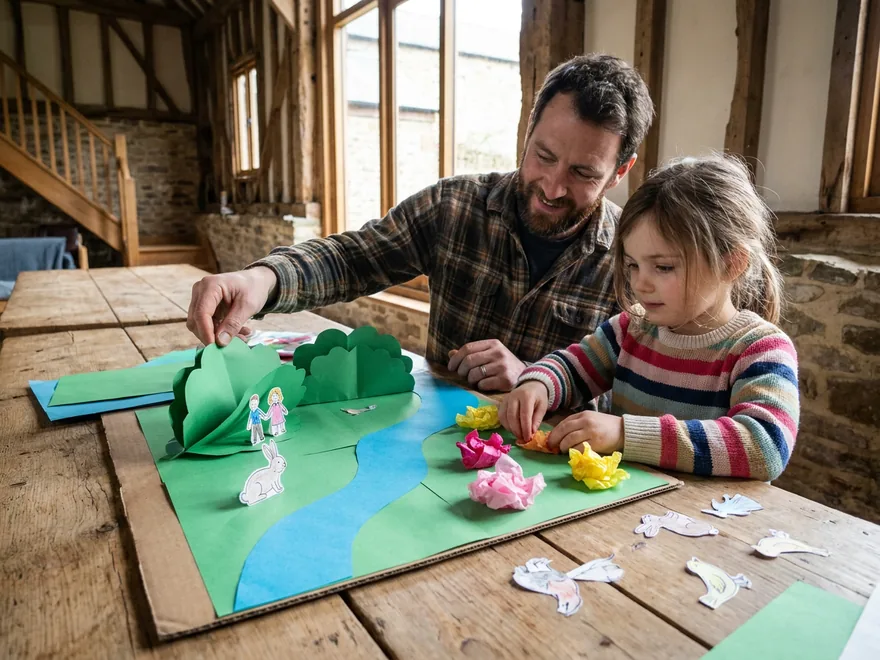
Cover a sheet of cardboard with green paper, add a blue paper river, and let your child fill the garden with scrunched tissue-paper flowers and drawn or cut-out animals. Glue one flap of paper bushes that actually lifts, with Adam and Eve tucked behind it. Retelling the hiding scene becomes a game of peekaboo with a point: God knew where they were all along.
Coats of Love Paper Dolls
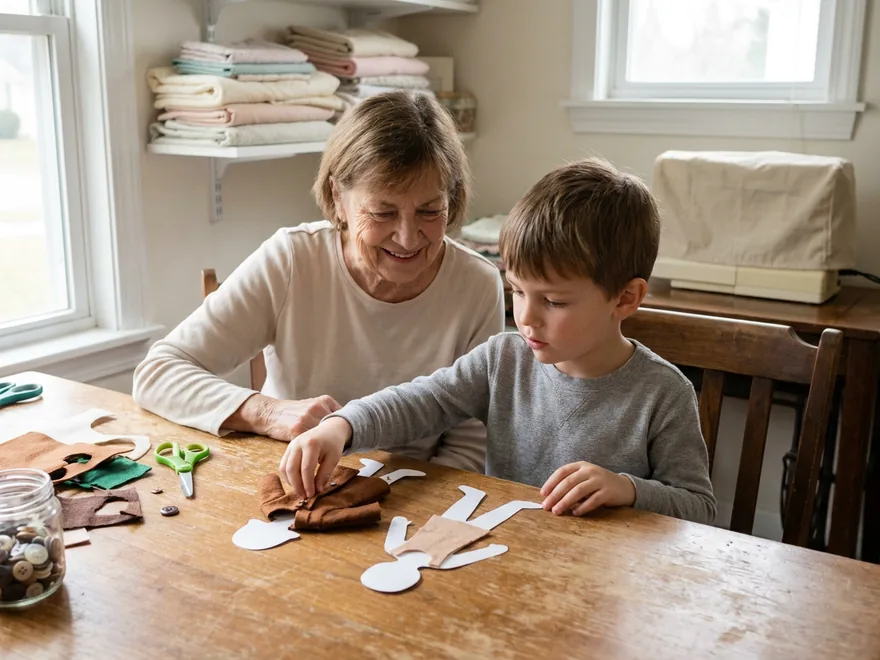
Draw two simple paper people, then cut warm clothes for them from fabric scraps, felt, or paper and dress them, just like God did in Genesis 3:21. On the back, help your child write 'God never stopped loving them.' It makes the gentlest moment of the story the one they take away.
Keep exploring.
Bible Stories in Chronological Order for Kids
See where this story fits in the full Genesis-to-Revelation reading plan: 27 stories in order with summaries, ages, and a free printable.
Browse →Old Testament Bible Stories
See where Adam and Eve fits inside a larger collection of foundational Old Testament stories for kids.
Browse →Preschool Bible Stories
Browse more simple, wonder-filled Bible stories perfect for young children.
Browse →More stories: Abraham and the Promise
Story 2 of 27 in the reading plan
These Bible story retellings are based directly on Scripture and written for children ages 3–8. Each page includes its Scripture reference so families can read the original passage together. Written and edited by Hannah Whitford. Quotations are verbatim from the World English Bible; each retelling is checked against the passage.